

Cellulite Reduction Thighs and Buttocks Guide
Cellulite is common, normal, and especially noticeable on the thighs and buttocks. If its dimpled texture bothers you, professional non-invasive treatments may help your skin look smoother without surgery or significant downtime. The best approach to cellulite reduction thighs and buttocks concerns depends on what creates the uneven appearance, your skin quality, and the result you want.
It is important to set the right goal from the start. Cellulite treatment is not the same as weight loss, and no responsible provider should promise to erase every dimple permanently. A personalized plan can instead target texture, support firmer-looking skin, and help you feel more confident in clothing or swimwear.
Cellulite reduction thighs and buttocks: why these areas?
Cellulite develops when fat beneath the skin pushes upward while fibrous connective bands pull downward. That push-and-pull pattern can create the familiar dimples, ripples, or orange-peel texture. The thighs and buttocks contain subcutaneous fat and connective tissue arranged in ways that often make this texture more visible.
Genetics influence whether you develop cellulite and how noticeable it becomes. Hormonal factors, skin thickness, age, circulation, and changes in body composition can also affect its appearance. This is why cellulite may be present on someone who exercises regularly and maintains a stable weight.
Cellulite is not a fitness failure
Cellulite does not mean that a person is unhealthy or out of shape. Exercise may strengthen underlying muscles and improve the overall contour of the legs and glutes. However, it cannot change every connective band beneath the skin. Weight loss can reduce fat volume for some people, yet cellulite may remain or occasionally look more noticeable if the skin becomes looser.
The location also matters. The backs and outer portions of the thighs may show rippling when standing. The buttocks may show individual depressions or a more generalized uneven texture. A provider should evaluate the areas in a natural standing position because the pattern may be less visible when you lie down.
Why cellulite changes over time
Skin naturally changes with age, and collagen support may decrease over time. When skin becomes thinner or less firm, the structures beneath it can become easier to see. Changes in weight may also alter the appearance of dimpling, but they are not the sole cause of cellulite. That is why treatment planning should focus on your current anatomy rather than a single lifestyle factor.
Which non-invasive cellulite reduction options can help?
Professional treatments use different methods to improve the appearance of cellulite. Some focus on skin firmness, some address the tissue beneath the skin, and others improve the contour around the treatment area. The right option depends on whether your primary concern is dimpling, laxity, unwanted fullness, or a combination.
| Approach | Primary goal | What to know |
|---|---|---|
| Energy-based skin treatments | Support firmer, smoother-looking skin | Results generally develop gradually and may require a series |
| Mechanical or acoustic treatments | Improve the look of uneven texture | May be used for broader areas of rippling or dimpling |
| Body contouring | Reduce or reshape localized fullness | Can improve overall proportions but is not automatically a cellulite treatment |
| Combination plan | Address texture, firmness, and contour | Useful when more than one factor contributes to the concern |
Skin-firming and texture-focused treatments
Non-invasive energy-based treatments may warm targeted tissue to support collagen remodeling and a firmer-looking surface. Other professional approaches use mechanical action or acoustic energy to target the look of uneven tissue. Because technologies work differently, your provider should explain what the recommended treatment is designed to do. The explanation should also connect the treatment to your specific pattern of cellulite.
LightRx offers personalized cellulite reduction treatments designed around individual concerns. A consultation is the best way to learn which available option is appropriate for the thighs, buttocks, or both.
When body contouring may complement treatment
If localized fullness changes the silhouette around your thighs or buttocks, a provider may also discuss non-invasive body contouring. Contouring and cellulite reduction solve different problems. Reducing a pocket of fat does not necessarily release a dimple. Smoothing texture does not necessarily reduce circumference. Combining goals thoughtfully may create a more balanced visual result.
Why a combination approach may be suggested
One person may have individual dimples, while another has broad rippling plus skin laxity. These patterns may not respond to the same type of care. A provider may recommend a staged plan when more than one factor affects the surface. Staging also makes it easier to see how each treatment contributes to the result.
Cellulite reduction versus fat reduction and skin tightening
Choosing the right treatment starts with naming the concern accurately. Cellulite is a surface-texture issue influenced by the relationship between skin, connective tissue, and underlying fat. Fat reduction targets unwanted volume. Skin tightening focuses on lax or less-firm skin. Although these concerns can appear together, they are not interchangeable.
How to identify your main concern
- Dimpling or rippling: Texture changes that appear as small depressions or an uneven surface may point toward a cellulite-focused plan.
- A pinchable pocket or unwanted bulge: Localized fullness may be better suited to body contouring.
- Loose or crepey-looking skin: A skin-firming approach may be the priority.
- A mixed concern: Many people have more than one feature and may benefit from a staged or combined plan.
A professional assessment prevents a common disappointment: receiving a treatment that works well for one concern but does not address the feature you wanted to change. During a consultation, describe the result you hope to see rather than asking only for a particular device or trend.
Use clear language during your consultation
Point to the exact areas that bother you and describe when the texture is most visible. For example, mention whether you mainly notice shallow rippling while standing or deeper dimples in every position. Also explain whether you want to change the outline of the thigh or only the skin surface. Specific goals help your provider recommend a more focused plan.
What should you expect from professional treatment?
Non-invasive treatments are designed to fit more easily into everyday schedules than surgery, but they still require planning and realistic expectations. Your exact experience depends on the recommended technology, treatment area, and individual response.
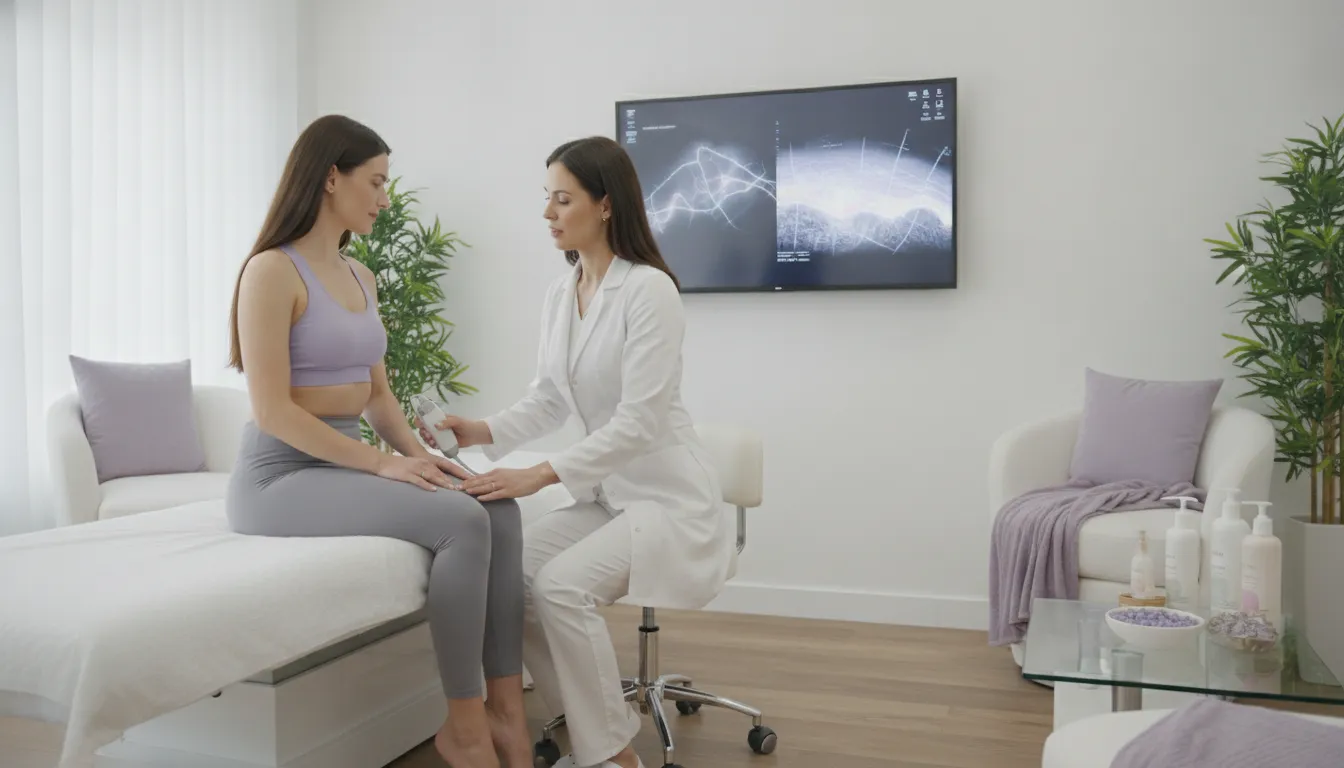
- Start with an assessment. Your provider reviews your goals, medical history, skin, tissue, and cellulite pattern. Share previous procedures and any changes in sensation, circulation, or skin health.
- Build a personalized plan. You will discuss which areas to treat, the expected number and spacing of sessions, preparation, aftercare, and likely maintenance.
- Complete the treatment session. Many non-invasive options are performed in-office. Sensations can vary, so tell your provider if you are uncomfortable at any point.
- Follow aftercare guidance. Instructions differ by treatment. Follow the specific recommendations provided to you instead of relying on generalized advice online.
- Track gradual changes. Some improvements become visible over time as the treated tissue responds. Standardized photos can make subtle texture changes easier to evaluate.
Comfort and downtime
Many non-invasive approaches involve little interruption to a normal routine. Temporary redness, tenderness, swelling, or sensitivity may occur depending on the method. Your consultation should cover possible side effects and when to contact the practice. If you have a major event or vacation planned, ask how far in advance treatment should begin.
Why a series may be recommended
Cellulite texture often develops over years, and a single session may not produce the desired change. A series allows the provider to treat the area consistently and assess how your body responds. More treatment is not always better, however. The plan should be based on your response and goals rather than a one-size-fits-all package.
How progress is evaluated
Cellulite can look different depending on lighting, posture, muscle tension, and time of day. Standardized photos help create a fair comparison. Your provider may also assess the texture from several angles and ask how you feel about the change. These reviews can guide any adjustments to the plan.
How to compare cellulite treatment plans
Two treatment plans can sound similar while targeting very different layers of tissue. Before deciding, ask the provider to connect every recommendation to a visible concern. If the plan includes several services, you should understand the purpose of each one and the order in which they will be performed.
Look beyond the device name
A popular device is not automatically the right choice for every dimple or area of laxity. The provider’s assessment, treatment technique, and ability to set realistic expectations all matter. Ask to see examples that reflect concerns similar to yours. Remember that another person’s result cannot predict your own.
Compare the complete commitment
When comparing options, consider the full recommended series, appointment schedule, aftercare, possible downtime, and maintenance. A plan that fits your calendar and expectations is easier to complete consistently. Ask what happens if your response is slower than expected and when the provider will reassess the plan.
Also discuss how progress will be documented. Photos taken in consistent lighting and body positions can reveal changes that are hard to judge from day to day. A clear review point helps you and your provider decide whether to continue, adjust, or pause treatment.
Ask about realistic limitations
A thorough consultation should cover what the treatment is unlikely to change. For example, a texture-focused treatment may not significantly change the size of the thighs. A contouring service may not correct deeper dimples. Knowing these limits before treatment helps you make a confident, informed choice.
How long do smoother-looking results last?
Results vary by treatment type, individual biology, age, skin quality, and changes in weight. Some people notice a meaningful improvement in texture, while others see a more subtle change. Because cellulite is influenced by underlying anatomy and ongoing biological factors, maintenance may be recommended to support the result.
What maintenance can look like
Your provider may suggest periodic follow-up sessions after an initial treatment series. The right interval cannot be determined until your response is evaluated. Ask how progress will be measured and what signs indicate that a maintenance visit could be useful.
Healthy habits can support overall skin and body wellness, but they should not be framed as a cure for cellulite. Regular movement, strength training, balanced nutrition, hydration, and stable weight may complement professional care. They do not guarantee that dimples will disappear, and their absence is not the reason cellulite exists.
Set a realistic finish line
A good outcome is usually smoother-looking, more even texture rather than completely flawless skin. Before treatment, ask the provider to explain which features are likely to respond and which may remain. Clear expectations make it easier to evaluate the value of treatment and decide whether future maintenance is worthwhile.
Are you a good candidate for cellulite reduction?
A reasonable candidate is generally someone bothered by visible cellulite on the thighs or buttocks who understands that treatment aims to improve, not perfect, skin texture. Non-invasive care may appeal to people who want gradual results and prefer to avoid surgical downtime.
Candidacy is not based only on appearance. Your provider needs a complete medical history and must evaluate the treatment area. Pregnancy, active skin irritation, certain health conditions, implanted devices, medications, or previous procedures may affect which options are appropriate. Do not withhold information because a treatment is described as non-invasive.
Questions to ask during your consultation
- Which feature of my cellulite will this treatment target?
- Is my main concern texture, fullness, skin laxity, or a combination?
- What change is realistic for my thighs and buttocks?
- How many sessions may be recommended, and how will progress be assessed?
- What side effects, aftercare, and maintenance should I expect?
A trustworthy provider should be comfortable explaining limitations as well as benefits. Consider it a positive sign when the recommendation is tailored to your anatomy instead of promising the same result for everyone.
Frequently asked questions
Can you completely get rid of cellulite on your thighs and buttocks?
No treatment can responsibly guarantee the permanent removal of every dimple. Professional options may reduce the appearance of cellulite and create smoother-looking texture. The degree of improvement and how long it lasts vary among individuals.
Does losing weight remove cellulite?
Weight loss may reduce fat volume, but cellulite can remain because connective tissue and skin structure also shape its appearance. It affects people across a wide range of body sizes and fitness levels.
How many cellulite reduction sessions will I need?
The number depends on the technology, the areas treated, the severity and pattern of cellulite, and your response. A provider can recommend a plan after assessing your thighs and buttocks in person.
Can body contouring and cellulite reduction be combined?
They may be combined when both localized fullness and uneven texture are concerns. Because they address different goals, a provider should determine the sequence and explain what each part of the plan can realistically accomplish.
Is cellulite reduction only for women?
No. Cellulite is more common in women because of differences in connective tissue and fat distribution, but anyone concerned about uneven texture can request an assessment. Candidacy depends on anatomy, health history, and treatment goals.
Ready to explore a smoother-looking result?
Your cellulite pattern is personal, and your treatment plan should be too. LightRx can help you understand which non-invasive option aligns with your thighs, buttocks, skin quality, and goals.
Schedule a personalized cellulite reduction consultation to discuss realistic results, treatment expectations, and a maintenance plan made for you.


