


Laser Hair Removal for Men: A Complete Guide to Aerolase Neo Elite
For many men, managing unwanted hair means repeating the same routine across the chest, back, neck, or beard area. Shaving is temporary, while waxing can be uncomfortable and removes the follicle needed for laser treatment. A clinical study of male trunk hair reduction found that demand is increasing and that larger, difficult-to-treat areas such as the back and chest can respond effectively. Schedule a free personal consultation today to discuss your goals and learn how laser hair removal for men can fit your routine.
Laser hair removal for men uses targeted light energy to reduce unwanted hair over a series of treatments. At LightRx, the Aerolase Neo Elite delivers a 650-microsecond 1064 nm Nd:YAG wavelength designed for all skin types and tones, with no cooling or anesthesia required.
The right plan depends on the area being treated, hair characteristics, growth cycle, and comfort preferences. Understanding why men are choosing this approach helps put the treatment process, expected timeline, and long-term convenience into perspective.
Why Are More Men Choosing Laser Hair Removal?
Unwanted body hair is less a cosmetic concern for many men than a recurring time commitment. Shaving requires frequent upkeep, while waxing involves repeated appointments and temporary regrowth. Laser treatment offers a more durable approach by targeting the follicle rather than trimming hair at the skin’s surface.
Efficiency for busy routines
Daily shaving may be manageable for a small area, but maintaining the chest, back, shoulders, or other larger areas can become inconvenient. Back hair is also difficult to reach and shave evenly without assistance. A professional treatment plan addresses selected areas systematically, helping reduce the need to repeat the same grooming task every few days. Because laser hair removal is non-invasive and does not require surgical recovery, many patients value the ability to pursue treatment without planning around extended downtime.
The practical benefits of laser treatment depend on the area treated, hair characteristics, skin type, and response to each session. A consultation allows a qualified provider to assess those factors and set realistic expectations rather than promise an identical outcome for every patient. Read more about the Aerolase Neo Elite 650-microsecond difference.
Long-term value beyond temporary grooming
Shaving and waxing manage visible hair temporarily. Laser hair removal is designed as a longer-term solution for unwanted hair. The goal is meaningful reduction over time, not an instant change after one visit. Hair growth cycles mean that multiple treatments are generally needed, and results vary by individual.
Demand among men has also become more visible in clinical literature. A study indexed by the National Library of Medicine describes rising demand for treatment among men, including treatment of difficult-to-address trunk areas such as the chest and back. The study also reports substantial hair reduction in the treated areas, supporting laser hair removal as a clinically evaluated option rather than a passing grooming trend: read the study abstract.
Men considering treatment can learn more about professional laser hair removal for men at LightRx and discuss the areas they want to address during a personal consultation.
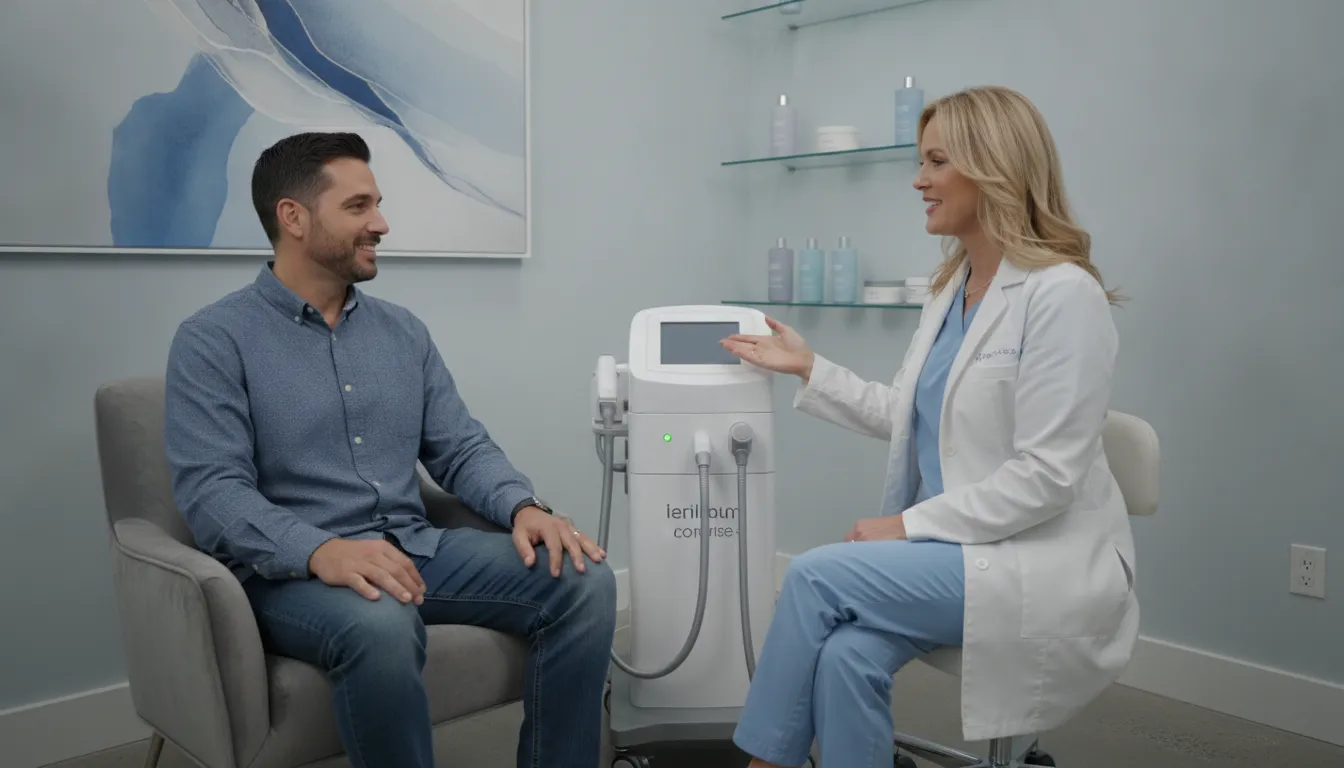
Common Treatment Areas: Back, Chest, Beard, and Beyond
Back and chest treatments are among the most common requests from men. These areas cover substantial surface area, can be difficult to reach consistently, and often produce visible stubble or irritation when managed with a razor. A professional laser plan can address the hair follicle more directly, reducing the need to shave large areas repeatedly.
Back, chest, and shoulders
The back is one of the clearest examples of where laser treatment offers practical advantages. Shaving it independently is awkward, and waxing can be uncomfortable, time-consuming, and difficult to maintain as hair regrows. Clinical research identifies the back and chest as difficult-to-treat areas in men, while also reporting that laser treatment can be effective for extended body areas.
Treatment plans may focus on the back alone, combine the back with the shoulders or neck, or include the chest and abdomen according to each patient’s goals. Area size and the number of regions selected affect the scope of a plan, so a consultation is more useful than relying on generic menu pricing.
Beard and neck treatment
Laser hair removal can also be used for smaller, detail-oriented areas such as the beard line, cheeks, chin, and neck. Men often choose these areas to reduce daily shaving, manage persistent neck irritation, or create a cleaner outline. Because facial areas require careful positioning and individualized settings, treatment should be planned by a trained professional rather than approached as a one-size-fits-all service. Explore facial laser hair removal options.
Secondary areas
Additional treatment areas can include the buttocks, legs, arms, hands, feet, toes, stomach, and the area around the areola. These requests are often added to a larger plan or addressed separately based on personal preference, athletic activities, or grooming habits. The Aerolase Neo Elite is versatile enough to support both broad areas such as the back and smaller areas such as the beard and hands.
How Does Aerolase Neo Elite Handle Coarse Male Hair?
Coarse hair presents a distinct challenge for laser treatment. Its thicker shaft can require more energy to reach the follicle effectively, while the surrounding skin still needs careful protection. Aerolase Neo Elite is designed around that balance, making it a strong option for men seeking long-term reduction on areas such as the back, chest, shoulders, or beard.
Deep follicle targeting with a 1064 nm wavelength
Aerolase Neo Elite uses a 650-microsecond, 1064 nm Nd:YAG laser. The wavelength is designed to penetrate deeply into the dermis where it can target the hair follicle rather than treating only the visible portion of the hair above the skin. That depth is especially relevant when male hair is dense, thick, or rooted more deeply.
The 650-microsecond pulse delivers energy in an exceptionally short interval. This ultra-fast delivery helps the device address thick hair shafts while minimizing unnecessary heat exposure and discomfort. It gives the provider a precise way to work across larger areas without relying on repeated shaving, waxing, or plucking between appointments.
Designed for a broad range of skin tones
Some older laser technologies were less adaptable when coarse hair was paired with darker skin tones. Aerolase Neo Elite uses the 1064 nm Nd:YAG wavelength and is designed to be safe for all Fitzpatrick skin types and tones. That does not remove the need for an individualized assessment, but it gives providers a versatile platform for treating men with a wide range of complexions.
Safety and effectiveness depend on appropriate settings, treatment timing, and an evaluation of the target area. During a consultation, the provider can assess hair density, skin tone, growth pattern, and the area being treated before creating a plan. LightRx offers personalized treatment plans built around those factors.
Comfort without cooling or anesthesia
Aerolase Neo Elite does not require cooling or anesthesia for treatment. That can simplify appointments and support a more comfortable experience, particularly when working across broad areas of coarse hair. Patients may still notice warmth or brief sensations as the laser treats the follicles. But the process is non-invasive and does not require the preparation associated with surgical procedures.
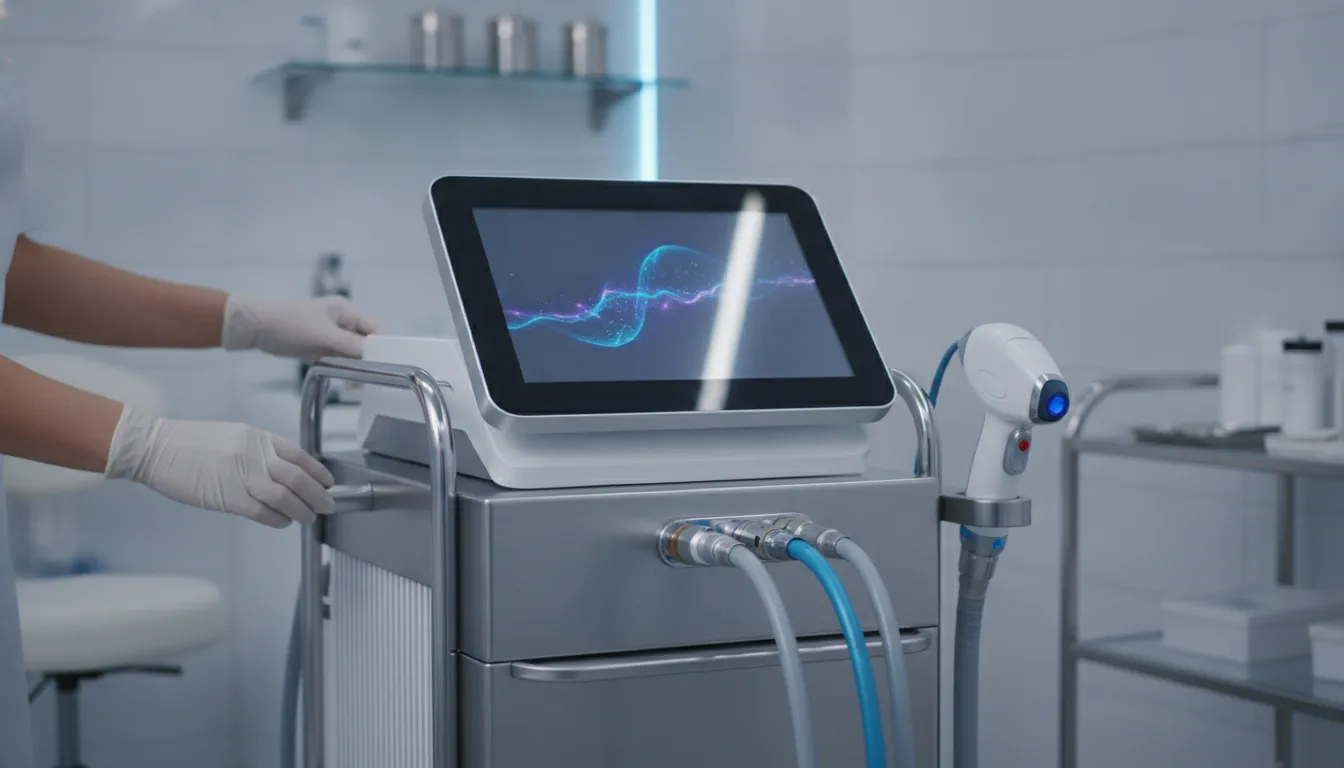
What Does Laser Hair Removal Feel Like?
For many men, the first question about laser hair removal is simple: will it hurt? With the Aerolase Neo Elite, treatment delivers a brief heat-only sensation rather than the prolonged discomfort some patients associate with older laser systems. Most people describe each pulse as similar to a quick rubber-band snap against the skin, although sensitivity varies by treatment area and individual tolerance. GQ describes the same rubber-band-snap comparison when explaining what laser hair removal can feel like.
A straightforward appointment without gel or anesthesia
Aerolase is designed to provide effective treatment without cooling gel, numbing cream, or anesthesia. The absence of gel keeps the appointment clean and simple, which is especially useful when treating larger areas such as the back or chest. Your provider can work efficiently while monitoring your comfort and adjusting the approach to the area being treated.
This heat-only experience also contrasts with older systems that often relied on messy cooling gels and could feel more uncomfortable during treatment. Aerolase gives men a practical option for managing unwanted hair without making discomfort the defining part of the appointment.
Fast sessions and no required downtime
Appointment length depends on the size of the area and the treatment plan. A back treatment may take approximately 20 to 30 minutes. Afterward, there is no required recovery period, so many men can return to work or continue their day immediately. That efficiency makes professional laser hair removal easier to fit into a busy schedule than recurring shaving, trimming, or waxing appointments.
Temporary redness, warmth, or other short-term reactions can occur after laser treatment. Clinical research reports that observed side effects were transient and did not leave permanent scars. Your provider will review appropriate aftercare and explain what to watch for, so you can approach each appointment with clear expectations.
Building Your Treatment Plan: Sessions, Costs, and Timeline
A thoughtful plan accounts for the hair growth cycle, the treatment area, and the difference between temporary removal and permanent reduction. With laser hair removal for men, LightRx typically plans a series of 8 sessions, scheduled 4 to 8 weeks apart. This schedule is designed to reach follicles during the anagen, or active growth, phase, when laser energy can be most effective. Across the series, the expected outcome is approximately 90% to 95% hair reduction, although individual results vary with hair characteristics, treatment area, and growth patterns.
| Method | Sessions needed | Time per session | Results | Maintenance frequency | Cost over 5 years |
|---|---|---|---|---|---|
| Aerolase laser hair removal | Typically 8 initial sessions | Varies by treatment area | Approximately 90% to 95% reduction; permanent reduction, not temporary removal | Follow-up maintenance based on individual regrowth | Planned treatment investment, with less recurring cost than shaving or waxing |
| Shaving | No formal sessions | Repeated grooming time | Temporary removal at the skin surface | Often every few days to weekly, depending on growth | Ongoing razors, shaving cream, and time costs |
| Waxing | No initial series | Varies by area and appointment | Temporary removal from the root | Usually every 4 to 6 weeks | Recurring appointment costs and time, with discomfort for some patients |
Why the spacing matters
Hair does not grow uniformly. At any given appointment, some follicles are active while others are resting. Treating at intervals gives additional follicles the opportunity to enter the growth phase targeted by the laser. Spacing sessions too closely can reduce the value of a visit, while waiting much longer than recommended may slow progress. Your provider can adjust the timeline as your growth pattern changes.
Planning for long-term value
Shaving can appear inexpensive one purchase at a time, but the five-year cost includes replacement razors. Cream, repeated grooming, and the time required to maintain large areas such as the back or chest. Waxing replaces those daily tasks with appointments every 4 to 6 weeks, plus the cost and discomfort associated with recurring treatments. Laser hair removal requires an initial series, but its goal is lasting reduction rather than another temporary cycle of removal. Review our laser hair removal aftercare guide to understand the full treatment journey.
How Should You Prepare for Treatment and Care for Your Skin Afterward?
A few simple precautions can help your appointment go smoothly and keep treated skin comfortable between sessions. Follow your provider’s instructions if they differ, especially when treating sensitive areas or managing a prescription skincare routine.
- Shave the area about 24 hours before your appointment. Shaving leaves the follicle in place while helping activate the growth cycle needed for effective laser treatment. Avoid shaving immediately before your visit if your skin is prone to irritation, and tell your provider about any cuts, razor burn, or inflammation.
- Protect the follicle before your session. Do not wax, pluck, or use another method that removes hair from the root for four to six weeks before treatment and between sessions. These methods disrupt the follicle and can interfere with the growth cycle the laser needs to target.
- Avoid tanning and pause irritating products. Limit sun exposure before treatment, and avoid tanning beds, self-tanning products, and bronzers on the area being treated. Ask your provider whether you should pause retinoids, prescription exfoliants, or chemical peels. A one-week pause is commonly recommended, but your provider should make the final decision based on your skin and products.
- Use gentle care immediately afterward. Mild redness, warmth, or swelling can occur after laser hair removal. These effects are temporary and typically settle within several hours to one day. A clinical review reported that observed side effects were transient and did not leave permanent scars: read the clinical review on laser hair removal safety. Apply aloe vera or a gentle, fragrance-free moisturizer if your provider approves it, and avoid scrubbing or picking at the skin.
- Keep treated skin cool and protected. For the first 24 to 48 hours, avoid hot showers, saunas, steam rooms, and other sources of intense heat. Use broad-spectrum sunscreen with SPF 30 or higher between sessions, particularly on exposed treatment areas.
- Plan the next appointment before leaving. Schedule your next session with your provider. Treatments are commonly spaced four to eight weeks apart so the laser can address follicles during the appropriate growth phase. Your recommended timing may vary by body area, hair pattern, skin response, and progress.
Learn about leg laser hair removal options for complete body coverage.
Frequently Asked Questions
How many sessions are usually needed?
Most treatment plans include about eight sessions, scheduled roughly four to eight weeks apart. The exact number depends on the area, hair characteristics, and where follicles are in the growth cycle. Treating follicles during the active anagen phase is why sessions are spaced over time rather than completed all at once.
Is Aerolase Neo Elite comfortable for coarse hair?
Aerolase Neo Elite is designed to treat coarse hair without cooling or anesthesia. You may notice warmth or brief pulses during treatment, but your provider will adjust the approach to the area and your comfort. A consultation is the best time to discuss sensitivity, prior hair-removal experiences, and expectations.
Can men with darker skin tones receive treatment?
The Aerolase Neo Elite uses a 650-microsecond, 1064 nm Nd:YAG laser and is designed to be safe for all Fitzpatrick skin types and tones. Your provider should still evaluate your skin, hair, and treatment area before creating a plan, because settings and timing are individualized.
What should I do before a laser hair removal appointment?
Shave the area as directed before your appointment so the laser can work at the follicle. Do not wax or pluck between sessions, because removing the hair from the root disrupts the growth cycle needed for treatment. Follow any additional instructions from your provider, especially regarding sun exposure and products applied to the area.
What can I expect after treatment?
Laser hair removal is non-invasive, so most people can return to normal activities without significant downtime. Temporary effects can occur, and clinical research reports that observed side effects were transient without permanent scarring (clinical review). Follow your provider’s aftercare guidance and protect treated skin from unnecessary sun exposure.
Schedule Your Personal Consultation
A personal consultation can help you discuss your goals, review suitable treatment areas, and understand how a plan may fit your routine. When you are ready to take the next step, schedule a free personal consultation with the LightRx team. You can ask questions about the Aerolase Neo Elite experience, preparation, and timing before deciding whether laser hair removal is right for you.