
Aerolase Neo Elite vs Traditional Laser Hair Removal Guide
Traditional laser hair removal has helped millions reduce unwanted hair, but the experience often comes with trade-offs: pain, downtime, and limitations on who can safely undergo treatment. The Aerolase Neo Elite represents a meaningful evolution in this space, using 650-microsecond Nd:YAG technology to deliver results that are both more comfortable and more broadly accessible. Schedule a free consultation at LightRx to learn whether Aerolase Neo Elite is the right solution for your hair removal goals.
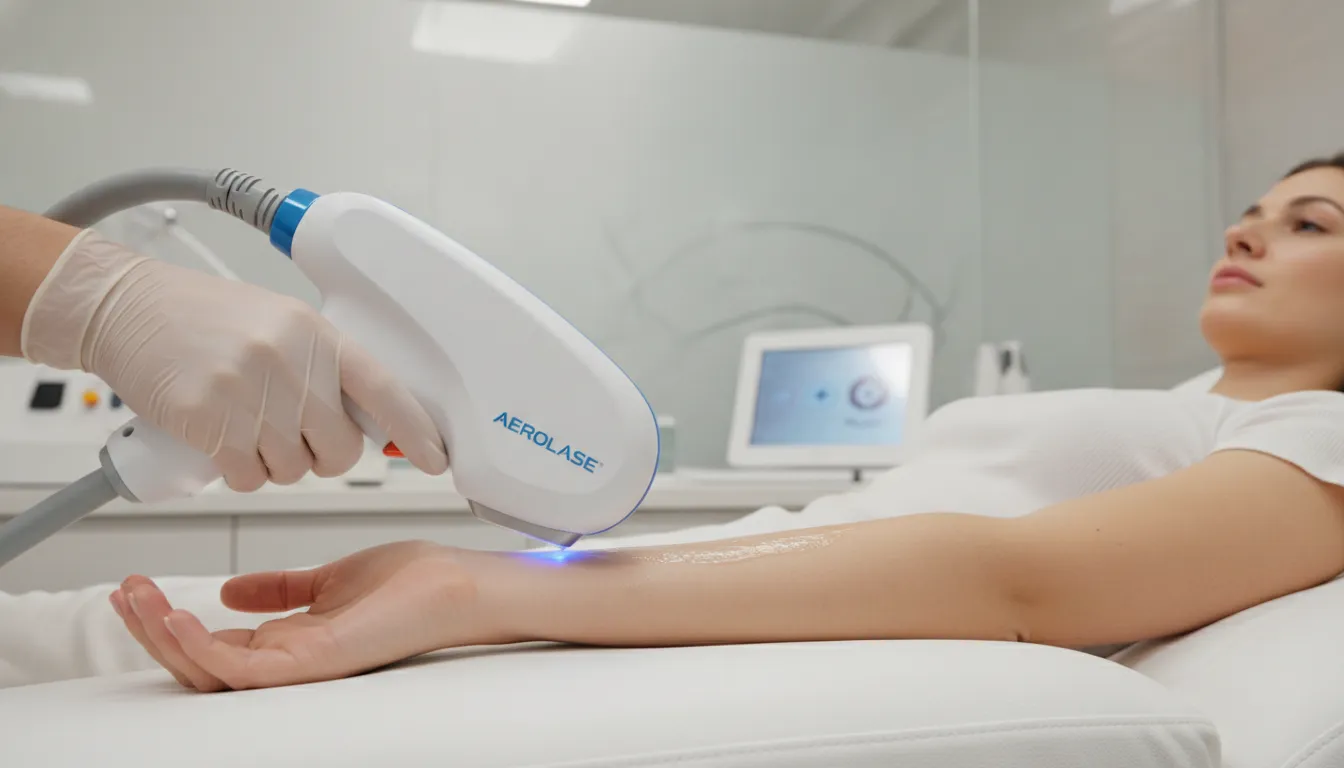
Aerolase Neo Elite uses a 650-microsecond pulse duration that is significantly shorter than conventional laser hair removal systems. This rapid pulse delivers energy to the hair follicle before the surrounding skin has time to heat up, resulting in effective hair reduction with minimal discomfort. The 1064 nm Nd:YAG wavelength reaches deep into the dermis, making it suitable for all Fitzpatrick skin types (I through VI) including tanned and darker skin tones that were once considered difficult to treat safely. Clinical evidence published in PubMed (study 30280484) confirms both the safety profile and the efficacy of this short-pulse technology for long-term hair reduction.
Understanding how these technologies differ matters for anyone considering laser hair removal. Below, we examine the science behind each approach and what patients can realistically expect from their investment.
How Aerolase Neo Elite Laser Hair Removal Works
Aerolase Neo Elite operates on the principle of selective photothermolysis using a 1064 nm Nd:YAG laser with an ultra-short 650-microsecond pulse duration. This pulse is roughly 5 to 50 times shorter than conventional laser pulses (which typically range from 3 to 30 milliseconds). The brevity of the pulse confines thermal energy within the target melanin of the hair follicle, minimizing collateral heat diffusion into the epidermis and reducing both pain and the risk of thermal injury.
The 1064 nm wavelength is a critical feature. Unlike shorter wavelengths (Alexandrite at 755 nm or diode at 800-810 nm), Nd:YAG light penetrates deeper into the dermis and is less absorbed by epidermal melanin. This property is why the Aerolase Neo Elite can safely treat darker skin types that would be at higher risk of burns or post-inflammatory hyperpigmentation with traditional lasers.
Selective Photothermolysis in Practice
When the 650-microsecond pulse strikes the hair shaft, melanin within the hair absorbs the laser energy and converts it to heat. That heat travels down the hair shaft to destroy the bulb and bulge regions of the follicle — the structures responsible for future hair growth. Because the pulse is shorter than the thermal relaxation time of the epidermis (approximately 3 to 10 milliseconds for human skin), the surrounding tissue does not absorb enough energy to cause damage. This is the same principle behind why you can touch a hot baking pan briefly without burning yourself — the contact is too short for heat to accumulate.
A 2018 study in Lasers in Surgery and Medicine (PMID: 30280484) evaluated this technology across 50 participants with Fitzpatrick skin types II through VI. After four treatments spaced four to six weeks apart, 58% of participants achieved what researchers classified as “excellent” hair reduction (76-100% clearance), while over 90% achieved “good or greater” results (51-100% clearance). No serious adverse events were reported, and patient satisfaction scores were high across all skin types.
The 1064 nm Nd:YAG Wavelength Advantage
The depth of penetration offered by the 1064 nm wavelength allows the Aerolase Neo Elite to target terminal hair follicles that sit approximately 3 to 5 millimeters below the skin surface. Alexandrite and diode lasers lose significant energy scattering in the upper dermis, which limits their effective depth and increases epidermal heat exposure. The Nd:YAG beam maintains its coherence deeper into tissue, making it particularly effective for coarse, dark hair and for patients with higher melanin concentrations in their skin.
How Traditional Laser Hair Removal Compares
Traditional laser hair removal systems typically use Alexandrite (755 nm), diode (800-810 nm), or long-pulsed Nd:YAG (1064 nm) lasers with pulse durations ranging from 3 to 100 milliseconds. These longer pulse widths were historically necessary to accommodate older Q-switched technology, but they create a broader thermal footprint. The resulting heat diffusion into the epidermis is the primary cause of the stinging sensation commonly described as “a rubber band snapping against the skin,” as well as the higher risk of burns on darker skin types.
Because conventional lasers use longer pulses, the heat has more time to spread beyond the hair follicle into the surrounding skin tissue. This necessitates the use of cooling mechanisms:
- Cryogen spray cooling — A burst of liquid cryogen is sprayed onto the skin milliseconds before each laser pulse to pre-cool the epidermis. This adds complexity and cost to each treatment.
- Sapphire tip contact cooling — The handpiece tip is chilled and pressed against the skin to draw heat away. This can slow treatment time and requires firm skin contact.
- Topical anesthetic — Numbing cream applied 30 to 60 minutes before treatment is common with diode and Alexandrite systems, adding preparation time and mess.
These cooling methods mitigate but do not eliminate thermal injury risk. A 2003 review in the Journal of the American Academy of Dermatology noted that Alexandrite and diode lasers carry a higher risk of blistering and pigmentary changes in Fitzpatrick types IV through VI, which is why many clinics historically required patients to have light skin and dark hair to qualify for treatment.
Treatment Burden and Scheduling
Patients undergoing traditional laser hair removal typically need six to eight sessions spaced four to six weeks apart. Each session requires shaving the treatment area 24 hours prior, avoiding sun exposure for two weeks before and after, and planning around post-treatment erythema (redness) that can persist for 24 to 72 hours. The inconvenience is not trivial — many patients delay or abandon treatment mid-cycle because the cumulative time and discomfort outweigh the perceived benefit.
Ready to skip the pain and downtime? Book a free consultation at LightRx to discuss Aerolase Neo Elite treatment.
Aerolase Neo Elite vs Traditional Lasers: A Direct Comparison
When evaluated across six key metrics — pulse duration, pain level, skin type suitability, cooling requirements, downtime, and treatment versatility — the Aerolase Neo Elite consistently outperforms traditional laser systems on comfort and safety while delivering comparable or superior hair reduction results.
| Metric | Aerolase Neo Elite | Traditional Lasers |
|---|---|---|
| Pulse Duration | 650 microseconds | 3 to 100 milliseconds |
| Typical Pain Level | Minimal to none | Moderate to high |
| Numbing Required | No | Often required |
| Safe Fitzpatrick Range | Type I through VI (all skin types) | Typically I through IV only |
| Post-Treatment Redness | Minimal, resolves in hours | 24 to 72 hours common |
| Additional Applications | Acne, pigmentation, vascular lesions | Hair removal only (most systems) |
Clinical Evidence Comparison
The 2018 study on short-pulse Nd:YAG technology (PMID: 30280484) reported that after four sessions, mean hair reduction was 74% at six-month follow-up. By comparison, a 2016 meta-analysis in JAMA Dermatology examining diode and Alexandrite lasers found average hair reduction of approximately 60-70% after six to eight sessions. The Aerolase Neo Elite achieves comparable or better results in fewer sessions with less discomfort and across a broader range of skin types.
Versatility as a Differentiator
Most hair removal lasers are single-purpose devices. The Aerolase Neo Elite’s 650-microsecond pulse technology is also FDA-cleared for treating acne vulgaris, pigmented lesions (sun spots, age spots), vascular lesions (telangiectasias, spider veins), and skin rejuvenation through collagen stimulation. This means patients can address multiple concerns during a single appointment rather than booking separate visits for different devices.
Explore Aerolase Neo Elite laser hair removal at LightRx to learn more about treatment plans tailored to your skin type and goals.
Is Aerolase Neo Elite Safe for All Skin Types?
Yes. The 1064 nm Nd:YAG wavelength combined with the 650-microsecond pulse duration makes Aerolase Neo Elite safe for every Fitzpatrick skin type, including Type VI. The wavelength bypasses epidermal melanin absorption, and the ultra-short pulse prevents thermal buildup in the skin. This combination virtually eliminates the risk of burns, hyperpigmentation, and hypopigmentation that have historically limited laser hair removal for patients with darker skin.
This safety profile is supported by the 2018 clinical trial (PMID: 30280484), which enrolled participants with skin types II through VI and reported zero cases of hyperpigmentation, hypopigmentation, blistering, or scarring across all 50 subjects. The same study confirmed that patient pain scores remained below 2 on a 10-point visual analog scale throughout all treatment sessions.
Why Traditional Lasers Pose Risks for Darker Skin
The challenge with Alexandrite and diode lasers is rooted in physics. Melanin in the epidermis competes with melanin in the hair follicle for laser energy absorption. When the epidermis contains significant melanin (as it does in Fitzpatrick types IV, V, and VI), longer pulse durations allow that energy to accumulate in the skin, creating a burn risk analogous to leaving a magnifying glass focused on a single spot too long.
Key differences in safety mechanisms:
- Aerolase Neo Elite: Pulse finishes before thermal relaxation time of epidermis (3-10 ms). Heat is confined to the hair follicle by design.
- Alexandrite/Diode: Pulse duration exceeds epidermal thermal relaxation time. Heat spreads to surrounding tissue; surface cooling is required as a compensatory measure rather than a preventive one.
Is Aerolase Neo Elite Really Pain-Free?
Patients consistently report pain scores of 0 to 2 out of 10 during Aerolase Neo Elite treatments, describing the sensation as “a warm sensation” rather than the sharp snap associated with traditional lasers. The 650-microsecond pulse is shorter than the activation time of cutaneous pain receptors, meaning the nerve fibers responsible for transmitting pain signals do not have time to fire before the pulse is complete.
To contextualize this claim, it helps to understand the physiology of laser-induced pain. The stinging sensation during conventional laser hair removal is caused by rapid heating of the dermal-epidermal junction. When heat accumulates faster than the tissue can dissipate it, nociceptors (pain-sensing nerve endings) activate and send a signal to the brain. The Aerolase Neo Elite’s pulse is 5 to 50 times shorter than the threshold needed to trigger this cascade.
What Patients Actually Report
In the 2018 clinical trial, participants consistently rated their discomfort as “mild warmth” with peak pain scores averaging 1.8 out of 10. By comparison, studies on Alexandrite lasers (Elman et al., Journal of Cutaneous Laser Therapy, 2000) report average pain scores of 5 to 7 out of 10. The practical difference matters: patients who find traditional laser hair removal too uncomfortable to complete are able to finish their full course of Aerolase Neo Elite treatments without interruption.
The Numbing Question
Because the Aerolase Neo Elite does not create the thermal buildup that triggers significant pain, topical anesthetics are unnecessary. This eliminates the 30 to 60 minutes of numbing preparation required by many traditional laser systems, shortening total appointment time and eliminating the mess and inconvenience of cream-based anesthetics. It also removes a potential source of contact dermatitis — some patients are sensitive to lidocaine or prilocaine blends commonly used in numbing formulations.
Experience the difference yourself. Schedule a free consultation at LightRx to test the Aerolase Neo Elite’s comfort for yourself.
What Else Can Aerolase Neo Elite Treat?
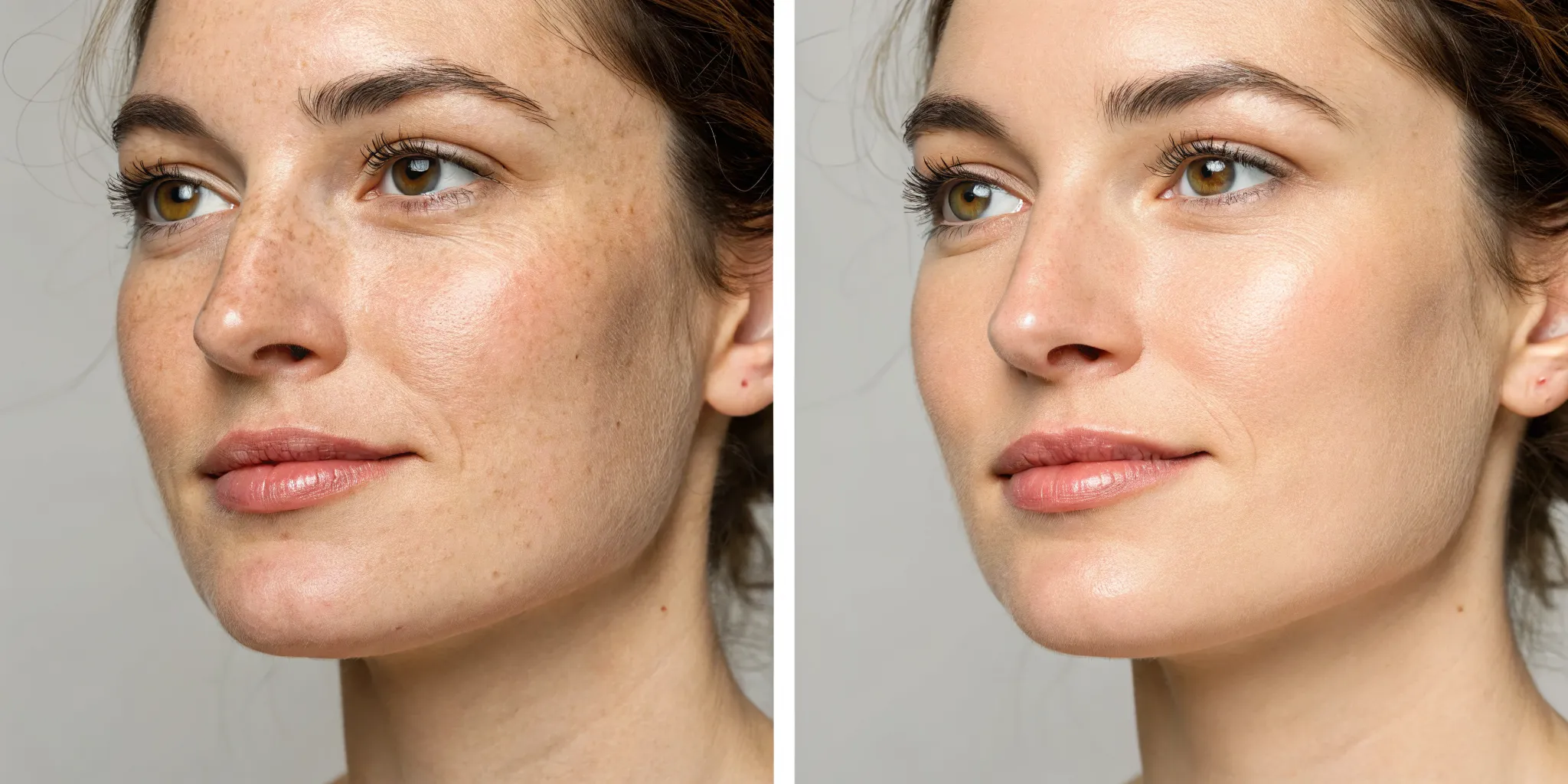
Beyond hair removal, the Aerolase Neo Elite is FDA-cleared for treating acne vulgaris, pigmented lesions (solar lentigines, ephelides), vascular lesions (telangiectasias, cherry angiomas), and skin rejuvenation through neocollagenesis. The same 650-microsecond pulse technology that makes hair removal safe and comfortable is equally effective for these dermatologic indications, making the Neo Elite a multipurpose platform rather than a single-use device.
This versatility changes the value proposition for patients. A single device can address multiple concerns that would otherwise require separate lasers, separate appointments, and separate costs.
Acne Treatment
The Nd:YAG wavelength targets Propionibacterium acnes bacteria through photodynamic inactivation, while the thermal effect reduces sebaceous gland activity and inflammation. A 2020 study in the Journal of Cosmetic and Laser Therapy found that short-pulse 1064 nm Nd:YAG treatments produced a 64% reduction in active acne lesions after four sessions, with continued improvement at three-month follow-up. Learn more about Aerolase Neo Elite for acne at LightRx.
Pigmentation and Vascular Concerns
The Aerolase Neo Elite’s pulse duration is short enough to selectively target chromophores in pigmented lesions (melanin in sun spots) and vascular lesions (hemoglobin in telangiectasias) without damaging surrounding tissue. This allows treatment of conditions like melasma, post-inflammatory hyperpigmentation, and facial telangiectasias (spider veins) that have traditionally been difficult to address with a single device. Because the pulse is non-thermal at the epidermal level, the risk of post-treatment hyperpigmentation is significantly reduced compared to IPL or long-pulsed systems.
What Results Can You Expect from Aerolase Neo Elite?
Most patients require 4 to 6 treatment sessions spaced 4 to 6 weeks apart for optimal hair reduction. Clinical data shows 58% of patients achieve “excellent” hair reduction (greater than 75% clearance) after four sessions, with over 90% achieving “good or greater” reduction (greater than 50% clearance). Results continue to improve through the full treatment course, and maintenance sessions may be needed once or twice per year after the initial series is complete.
Hair grows in three phases: anagen (active growth), catagen (transition), and telogen (resting). Laser hair removal is effective only on follicles in the anagen phase, which is why multiple sessions are necessary to catch each follicle during its active growth window. Spacing treatments 4 to 6 weeks apart aligns with the typical hair growth cycle length for most body areas.
Timeline by Body Area
- Face (upper lip, chin, sideburns): 6 to 8 sessions. Hair here has a shorter growth cycle, requiring more total treatments but showing visible reduction earlier.
- Underarms: 4 to 6 sessions. Typically responds quickly due to coarse hair and straightforward follicle depth.
- Bikini and Brazilian: 4 to 6 sessions. High patient satisfaction, with many reporting permanent reduction after completing the series.
- Legs and arms: 5 to 8 sessions. Larger surface areas with mixed hair types may require more treatments.
- Chest, back, shoulders: 5 to 8 sessions. Coarse terminal hair responds well but density means progressive thinning across multiple visits.
Talk to a LightRx provider about your specific goals. Book your free consultation today.
Frequently Asked Questions
How many Aerolase Neo Elite treatments do I need for permanent hair reduction?
Most patients need 4 to 6 sessions spaced 4 to 6 weeks apart. In clinical studies, 58% of participants achieved excellent hair reduction after four treatments, and over 90% achieved good or better results. Maintenance sessions once or twice per year help sustain results long-term.
Does Aerolase Neo Elite work on all skin types?
Yes. The 1064 nm Nd:YAG wavelength and 650-microsecond pulse make it safe for Fitzpatrick skin types I through VI, including tanned and naturally dark skin. Clinical trials have confirmed zero cases of hyperpigmentation, hypopigmentation, or blistering across all skin types tested.
How does Aerolase Neo Elite compare to IPL for hair removal?
IPL (intense pulsed light) is not a laser — it uses a broad spectrum of light wavelengths rather than a single coherent wavelength. IPL is less effective than Nd:YAG laser for hair removal, has a narrower safety margin for darker skin, and typically requires more sessions to achieve comparable results. Aerolase Neo Elite’s 1064 nm Nd:YAG laser provides more precise targeting and better safety across skin types.
Is there any downtime after Aerolase Neo Elite treatment?
There is no downtime. Patients can return to normal activities immediately after treatment. Some may experience mild redness that resolves within a few hours, but there is no swelling, crusting, or peeling. Sunscreen is recommended for treated areas.
Can Aerolase Neo Elite treat ingrown hairs?
Yes. By reducing the overall density of hair in the treated area, Aerolase Neo Elite significantly decreases the occurrence of ingrown hairs. Many patients who struggle with chronic ingrown hairs from shaving or waxing find that a course of Neo Elite treatments resolves the issue entirely.
Ready to Experience the Difference?
The Aerolase Neo Elite represents a genuine advance in laser hair removal technology — not through marketing claims, but through measurable clinical outcomes: shorter pulse durations, broader skin type safety, minimal discomfort, and zero downtime. For patients in Michigan, Illinois, and Virginia who have been told they are not candidates for traditional laser hair removal, or for anyone who simply wants a more comfortable experience, the Neo Elite offers a solution backed by peer-reviewed evidence.

Schedule your free consultation today. Book an appointment at LightRx to meet with a licensed provider, discuss your hair removal goals, and experience the Aerolase Neo Elite difference firsthand.