

Face Laser Hair Removal: What to Really Expect
When you add up the lifetime cost of razors, shaving cream, and waxing appointments, the numbers are staggering. But the investment goes beyond money; it’s also about the time and mental energy spent on daily upkeep. Face laser hair removal is an investment in a simpler, more confident lifestyle. By targeting hair at the root for long-term reduction, you can finally break free from the constant maintenance. This guide explores the real value of the treatment, looking at how it saves you time and money in the long run and gives you the priceless freedom of smooth, worry-free skin.
It might seem like magic, but the process behind face laser hair removal is pure science, designed to give you smooth, hair-free skin for the long haul. The core idea is simple: a concentrated beam of light targets unwanted hair right at the source. This technology is incredibly precise, making it a trusted solution for sensitive areas like the upper lip, chin, and sideburns. But how does it work without harming your skin? And is it truly safe? We’ll break down exactly what’s happening beneath the surface during a treatment, from how the laser targets the follicle to the safety measures that protect your skin.
Key Takeaways
- It’s a Long-Term Solution, Not a Quick Fix: Laser hair removal works by targeting the hair follicle to significantly reduce growth over time, offering a lasting alternative to the endless cycle of shaving and waxing.
- Success Requires a Personalized Plan: Your results depend on a series of treatments tailored to your unique hair color, skin tone, and hair growth cycle, which is why a professional consultation is the essential first step.
- Your Pre- and Post-Care Routine is Crucial: How you prepare for your appointment and care for your skin afterward directly impacts your safety and results. Following your technician’s advice, especially on sun protection, is key to achieving smooth skin without complications.
How Does Face Laser Hair Removal Actually Work?
If you’re tired of the endless cycle of waxing, plucking, and shaving, you’ve probably wondered about facial laser hair removal. It might seem like magic, but the process is pure science, designed to give you smooth, hair-free skin for the long haul. The core idea is simple: a concentrated beam of light targets unwanted hair right at the source. This technology is incredibly precise, making it a trusted solution for sensitive areas like the upper lip, chin, and sideburns. Let’s break down exactly what’s happening beneath the surface during a treatment.
How the Laser Targets Hair at the Root
At its heart, laser hair removal works by targeting the pigment, or melanin, in your hair. During a session, a specialized laser sends a highly focused beam of light directly to your hair follicles. The dark pigment in the hair absorbs this light energy, which then converts to heat. This heat strategically damages the follicle, the tiny sac responsible for producing hair. By disrupting the follicle’s ability to grow new hair, the treatment significantly reduces hair growth over time. This is why the process is most effective when hair is in its active growth phase, as the connection between the hair and the follicle is strongest.
But Is It Safe for My Face?
I know what you might be thinking: “A laser on my face? Is that safe?” Absolutely. The technology used in medical spas is incredibly sophisticated and designed with your safety in mind. The laser is calibrated to a specific wavelength that is only absorbed by the dark pigment in the hair, leaving the surrounding skin tissue completely unharmed. This precision is what makes it possible to treat delicate facial areas without causing damage. At LightRx, we only use FDA-cleared, clinically proven aesthetic treatments to ensure you get effective results safely. The process simply damages the follicle enough to slow or stop future growth, all without harming your skin.
What Happens During a Treatment Session?
Your Comfort and Safety Come First
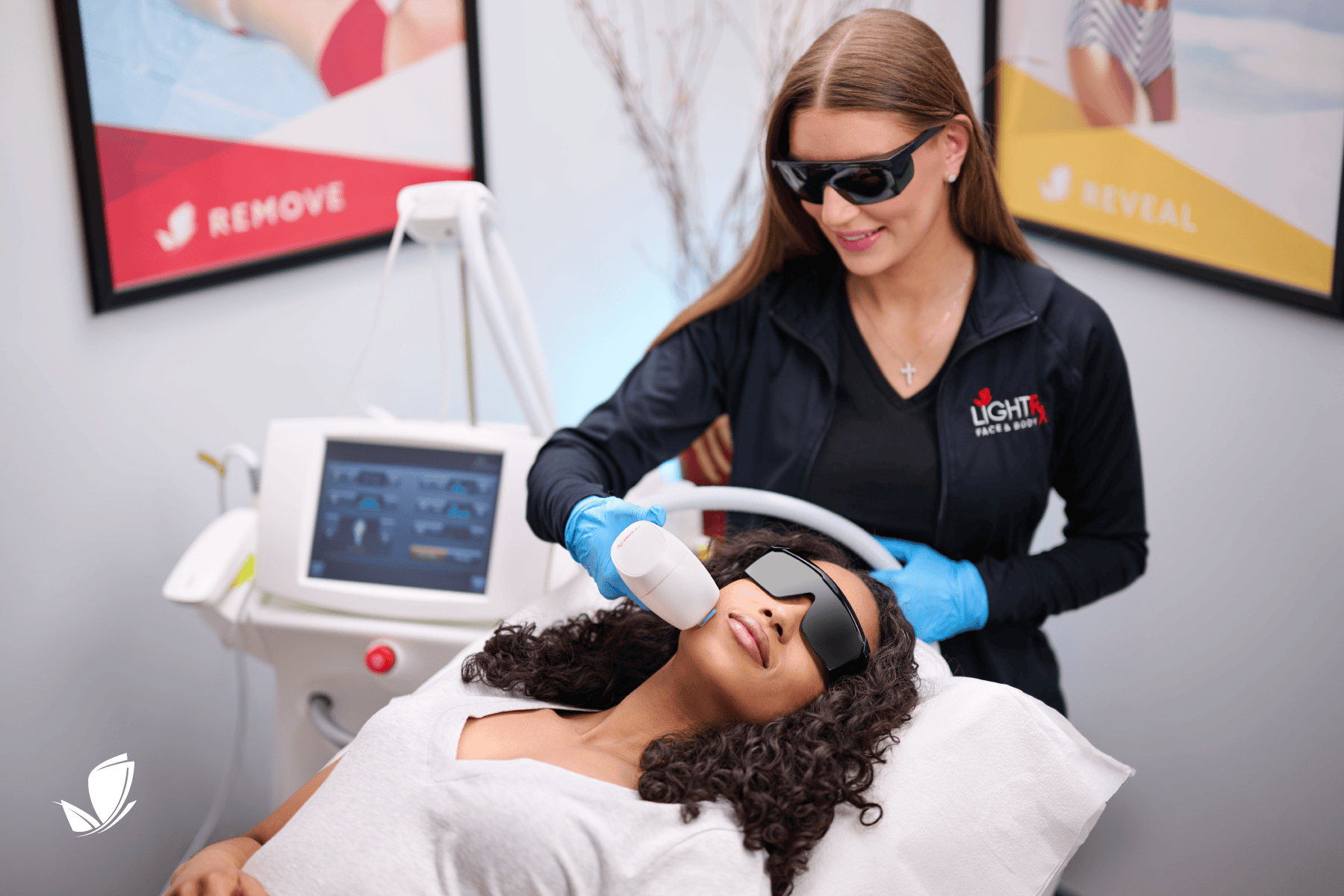
When you come in for a laser hair removal session, your comfort and safety are the top priorities. The entire process begins with a free consultation where a trained technician creates a personalized treatment plan just for you. This isn’t a one-size-fits-all approach; the plan is carefully tailored to your unique hair color, skin tone, and the specific growth cycle of your hair. This initial step is essential because it ensures the treatment is not only effective but also perfectly suited to your skin, setting you up for the best possible results from the very first appointment.
Once you’re ready for the treatment, a specialized laser emits a concentrated beam of light that targets the melanin, or pigment, in your hair. This light energy is absorbed by the dark pigment and converts to heat, which damages the hair follicle—the tiny sac responsible for hair production. By disrupting the follicle’s ability to grow new hair, the treatment significantly reduces hair growth over time. The technology is incredibly precise, calibrated to a specific wavelength that only affects the hair, leaving the surrounding skin tissue unharmed. This precision allows for safe treatment of delicate facial areas, such as the upper lip and chin.
Most people report that the sensation feels like a warm pinprick, which is generally considered less painful than waxing. The feeling is quick and manageable, and your technician will make sure you’re comfortable throughout the entire process. After your session, following your technician’s pre- and post-care advice is key. Simple steps, especially regarding sun protection, will help protect your skin, enhance your results, and ensure you achieve that smooth, hair-free complexion you’re looking for. It’s a straightforward process designed to be as comfortable as it is effective.
Which Laser Is Right for Your Face?
Not all lasers are created equal, and your treatment shouldn’t be a one-size-fits-all solution. Modern laser technology is highly advanced and can be adjusted to suit different skin tones and hair colors, which is crucial for getting the best and safest results. During your free consultation, a trained technician will assess your specific needs to determine the right type of laser and the optimal settings for you. This personalized approach ensures the laser effectively targets your hair follicles while protecting your skin. A custom treatment plan is the key to achieving that smooth, clear complexion you’re looking for.
Common Types of Lasers Used
When it comes to professional laser hair removal, there isn’t just one magic wand. Different lasers are designed to work best with specific skin tones and hair colors to give you the safest, most effective treatment. For example, the Alexandrite laser is often used for lighter skin tones because of its fast repetition rate, while the Nd:YAG laser has a longer wavelength that makes it the gold standard for safely treating darker skin without affecting the surrounding pigment. The Diode laser is another popular choice that offers a versatile middle ground for a range of fair to medium skin types. A skilled technician will know exactly which technology is the right match for you, ensuring your treatment is both comfortable and successful.
What Are the Real Benefits of Facial Laser Hair Removal?
If you’re tired of the endless cycle of shaving, waxing, and plucking, you’ve probably wondered if there’s a better way to deal with unwanted facial hair. The constant upkeep, irritation, and ingrown hairs can feel like a never-ending battle. Facial laser hair removal offers a completely different approach. Instead of just trimming or pulling the hair, it targets the problem at its source for results that go far beyond what traditional methods can offer. It’s about reclaiming your time, saving money in the long run, and, most importantly, feeling confident and comfortable in your own skin every single day. Let’s get into the real, tangible benefits you can expect.
Achieve Long-Lasting Smoothness
Think about how often you have to deal with facial hair. Shaving might be a daily chore, while waxing or threading appointments pop up on your calendar every few weeks. These methods are temporary fixes that only remove hair from the surface. Laser hair removal is different. It uses concentrated light energy to heat and damage the hair follicle, which significantly slows down future growth. While it’s technically “hair reduction” rather than permanent removal, the results are incredibly long-lasting. After completing your treatment plan, you can enjoy smooth, hair-free skin for months or even years, with only occasional touch-up sessions needed to maintain your results. It’s a true game-changer for anyone seeking a more permanent solution.
Say Goodbye to Ingrown Hairs and Razor Burn
One of the most frustrating side effects of shaving and waxing is the irritation that follows. Razor burn, red bumps, and painful ingrown hairs can make your skin look and feel worse, even when the hair is gone. Because laser treatments target the hair follicle directly, they prevent the hair from growing back trapped under the skin. This means you can finally say goodbye to those pesky and often painful ingrowns. By eliminating the need for constant shaving, you also get rid of the friction and blade-related irritation that causes razor burn. The result is not just hair-free skin, but clearer, smoother, and healthier-looking skin, which is a core goal of any effective skin rejuvenation plan.
A Solution for Chronic Folliculitis
If you constantly struggle with chronic folliculitis—those persistent, inflamed bumps that pop up after shaving or waxing—you know how frustrating it can be. This condition happens when hair follicles become irritated and infected, and traditional hair removal methods often make it worse. This is where laser hair removal can be a total game-changer. Instead of just dealing with the surface-level problem, the laser goes straight to the source. By targeting and damaging the hair follicle, it drastically reduces hair growth. Less hair growth means fewer opportunities for hairs to become trapped under the skin, which is the primary cause of folliculitis. The treatment effectively breaks the cycle of irritation, preventing those painful bumps from coming back and leaving you with genuinely smoother, healthier skin.
How It Saves You Time and Money
While the initial cost of laser hair removal might seem higher than a pack of razors or a waxing kit, it’s an investment that pays off. Think about the cumulative cost of razors, shaving cream, waxing appointments, and threading sessions over a lifetime—it adds up quickly. More than that, think about the time you spend. Those five or ten minutes a day spent shaving or plucking add up to hours each month and days each year. Laser hair removal gives you that time back. Once you complete your sessions, the daily or weekly maintenance routine is gone. This long-term saving of both time and money makes it a smart and efficient choice for your beauty routine.
Reclaiming Your Time
In our busy lives, time is everything, and the daily rituals of shaving, waxing, or plucking can feel like a major drain. Think about it: the cumulative cost of razors, creams, and waxing appointments adds up over a lifetime. But even more valuable is the time you spend on these routines. Those five or ten minutes dedicated to shaving each morning or the bi-weekly trip to the salon can accumulate into hours each month and even days each year. It’s a constant cycle of upkeep that demands not just your money, but your precious time and mental energy, pulling focus from things you’d rather be doing.
This is where laser hair removal offers a transformative solution, giving you that time back. It’s not just another temporary fix; it’s a long-term strategy for managing unwanted hair. After completing your personalized treatment plan, you can enjoy smooth, hair-free skin for months or even years at a time. The need for daily shaving or frequent waxing appointments practically disappears. Any maintenance is typically just an occasional touch-up session, which is a world away from the constant upkeep you’re used to. You can finally reclaim those minutes in your day and dedicate them to what truly matters to you.
When you step away from the constant maintenance of traditional hair removal, you realize that laser treatment is more than just a cosmetic procedure—it’s an investment in your lifestyle. Freeing yourself from the daily or weekly chore of hair removal simplifies your routine and reduces the mental load of constant upkeep. Plus, by eliminating the need for constant shaving or waxing, you also sidestep the irritation, razor burn, and ingrown hairs that often come with those methods. This leads to not just smoother skin, but healthier-looking skin that feels comfortable and clear, which is a true win-win.
Ultimately, making the switch to laser hair removal is a game-changer for anyone looking for a lasting solution to unwanted facial hair. It frees you from the relentless cycle of temporary fixes and the frustration that comes with them. Imagine waking up without having to think about shaving or scheduling your next wax, and instead just starting your day. It’s about embracing a more confident, carefree version of yourself, with more time and energy to pour into the people and passions you love.
The Freedom and Confidence of Hair-Free Skin
Beyond the practical benefits, the impact on your confidence is priceless. Imagine waking up without immediately checking for new hair growth or feeling self-conscious about your upper lip or chin. You can go on vacation without packing a razor, head to the gym without a second thought, and feel completely present in social situations. Getting rid of unwanted facial hair can profoundly change how you feel about yourself, allowing you to face the world with more confidence. This freedom from worry is one of the most powerful benefits of the treatment. It’s about simplifying your life and feeling great in your skin, which is what our services are all about.
An Unexpected Perk: Better Skin Texture
While the main goal is to get rid of unwanted hair, many people are surprised to discover another amazing benefit: smoother, more even-toned skin. The laser energy does more than just target the hair follicle; it gently heats the deeper layers of your skin, which stimulates your body’s natural collagen production. Over time, this can lead to a noticeable improvement in your skin’s texture, helping to soften the appearance of fine lines and even some types of acne scars. It’s a fantastic two-in-one benefit that supports your overall skin rejuvenation goals, leaving you with a complexion that’s not just hair-free, but also clearer and more radiant.
Let’s Talk About Potential Side Effects
Any effective cosmetic treatment comes with a few things to keep in mind, and laser hair removal is no exception. It’s completely normal to have questions about what happens after the laser does its work. Being informed about potential side effects is the best way to feel confident and prepared for your appointment, so you can focus on the exciting results ahead. The good news is that for most people, the side effects are minor and temporary. When you work with a trained professional, they know exactly how to minimize risks and ensure your treatment is both safe and successful. Their expertise is your best asset for a smooth experience from start to finish. The goal is always to get you the hair-free skin you want with as much comfort as possible. Understanding what to expect afterward is a key part of the process. From a little bit of redness to managing the “zap” sensation during the treatment, let’s walk through what you can expect so you can feel completely at ease. We’ll cover the most common reactions, how to manage discomfort, and why the right provider makes all the difference in your safety and satisfaction.
What to Expect Right After Your Treatment
After your session, it’s completely normal to experience some temporary skin irritation. Think of it like a very mild sunburn—you might see some redness, slight swelling, or feel a bit of discomfort in the treated area. This is actually a good sign! It shows that the laser has effectively targeted the hair follicles. These reactions typically calm down within a few hours. Your technician will give you specific aftercare instructions, like applying a cool compress, to help soothe your skin and speed up recovery. Most people find these effects are minor and don’t interfere with their day.
What About Skin Sensitivity and Pigmentation?
In some cases, the laser can cause temporary changes to your skin’s pigmentation, making it slightly darker or lighter in the treated area. According to the Mayo Clinic, these changes are more common in individuals with darker skin tones. The best way to prevent this is by diligently avoiding sun exposure before and after your treatment. A thorough consultation is key to preventing this. A skilled technician will assess your skin and hair type to select the right laser settings, significantly reducing this risk. This personalized approach ensures your laser hair removal treatment is tailored for the best and safest results.
Does It Hurt? Managing Discomfort During Treatment
This is probably the number one question on your mind. Most people describe the sensation as a quick, warm pinprick—like a rubber band snapping against the skin. While everyone’s pain tolerance is different, many find it much less painful than waxing. The discomfort only lasts for the split second the laser is active. Modern laser technology also includes cooling mechanisms to keep your skin comfortable throughout the session. Your technician is trained to make the experience as pleasant as possible, and they can adjust the settings if you feel any significant discomfort. Remember, each session is usually very quick, especially for facial areas.
Understanding Rare but Possible Risks
While facial laser hair removal is overwhelmingly safe, it’s smart to be aware of the full picture. Like any cosmetic procedure, there are a few rare but possible risks to consider. These issues are very uncommon, especially when your treatment is handled by an experienced and certified technician. Knowing about them ahead of time helps you ask the right questions during your consultation and ensures you feel completely confident in your decision. Being fully informed is the first step toward a great experience and even better results, allowing you to move forward with peace of mind.
Paradoxical Hypertrichosis
One of the rarest risks is a condition called paradoxical hypertrichosis. This is when the fine, light “peach fuzz” on the face grows back darker and thicker after treatment. It’s a counterintuitive outcome that is more likely to occur in individuals with darker or olive skin tones who are treating very fine hair. This is precisely why a professional assessment is non-negotiable. A skilled technician can evaluate your specific skin and hair type to determine if you are an ideal candidate for laser hair removal, ensuring the treatment plan is perfectly suited to you and minimizes any potential risks.
Blisters and Other Skin Reactions
In very rare instances, some people may experience temporary side effects like blisters, scabbing, or burning. These reactions are not typical and are usually a sign that the laser settings may not have been optimal for your skin type. Choosing a reputable provider is your best defense against this. At LightRx, our technicians are highly trained to perform treatments that are not only effective but also incredibly safe, using state-of-the-art technology to protect your skin. Following your personalized aftercare plan, which includes diligently avoiding sun exposure, is also essential for preventing these types of reactions and promoting healthy healing.
A Look at the Safety Data
When you look at the science, the safety of laser hair removal becomes clear. The technology has been studied for decades and has a strong track record of being both safe and effective. For example, one major study followed 948 patients over eight years and found the procedure to be highly effective, with only four patients reporting minor long-term issues. This data underscores why it’s a trusted solution worldwide. At LightRx, we build on that foundation of safety by using only FDA-cleared, clinically proven technologies. When performed by a qualified professional, laser hair removal is one of the most reliable methods for achieving long-term hair reduction.
Why Choosing a Professional Is Key to Your Safety
This is non-negotiable. Your safety and results depend entirely on the skill of the person performing the treatment. An experienced and licensed technician knows how to protect your skin, avoid sensitive areas like the eyes, and use the equipment correctly. According to WebMD, checking a provider’s qualifications is a critical step. At a professional medspa, you’re not just paying for a service; you’re investing in expertise. A proper consultation will cover your medical history and skin type to confirm you’re a good candidate. Choosing a reputable provider for your aesthetic treatments ensures you’re in the safest hands to achieve beautiful, lasting results.
How Many Sessions Will You Really Need?
This is probably the number one question on your mind, and the honest answer is: it varies. Facial laser hair removal isn’t a one-and-done magic trick; it’s a process that requires a bit of patience. Because the laser targets hair in its active growth phase, you need multiple sessions to catch every follicle at just the right time. Think of it as a strategic plan where we’re systematically treating the area over several months to achieve that smooth, hair-free skin you’re looking for. While there’s no universal number, we can give you a solid idea of what to expect. Most people start seeing significant, lasting hair reduction after a series of treatments. The key is consistency and following a plan tailored specifically to you. During your free consultation, we’ll go over your specific goals and hair type to map out a timeline that makes sense for you. This personalized approach ensures you get the most effective results from your laser hair removal investment.
Understanding Your Treatment Timeline
To understand your treatment timeline, you first need to know a little about your hair’s growth cycle. Each hair on your face goes through three phases: growing, resting, and shedding. Laser hair removal is most effective during the active growth phase (anagen), when the hair is firmly attached to the follicle. Since not all hairs are in the same phase at the same time, we need to schedule sessions several weeks apart to target new hairs as they enter this growth stage. Most people begin to see permanent hair loss after about three to seven sessions, which is why sticking to your recommended schedule is so important for achieving the best outcome.
What Affects Your Total Number of Sessions?
Your journey to smooth skin is unique, and so is your treatment plan. Several factors influence how many sessions you’ll need, including your hair color, hair thickness, skin tone, and the specific area you’re treating. For example, coarse, dark hair on fair skin typically responds the fastest. While some people might see a 20-30% reduction after just four treatments, achieving long-lasting results often requires a more comprehensive series. You’ll likely need several initial treatments to get started, with potential touch-up sessions down the road to maintain that flawless finish. We’ll assess all these factors to give you a realistic estimate from the start.
What Kind of Results Can You Expect and When?
Patience is key here, but the payoff is so worth it. You won’t walk out of your first appointment completely hair-free, but you will start to see changes pretty quickly. Many people notice a significant reduction in hair—often around 20-30%—after just a few sessions. As you continue with your personalized treatment plan, the results become more dramatic. The goal of facial laser hair removal is to target the follicle to significantly reduce growth over time. After completing your full series of treatments, you can expect incredibly smooth skin that lasts for months, or even years. To keep things perfect, you might need a touch-up session every so often, but you’ll be free from the daily hassle of shaving or waxing.
What to Do Between Your Appointments
What you do between sessions is just as important as the treatment itself. To get the best results, you need to let your hair follicles do their thing. This means no waxing, plucking, or threading the treated area. These methods remove the hair from the root, and we need that root intact for the laser to target it in your next session. Shaving is perfectly fine if you need to manage hair growth between appointments. Sessions are typically scheduled six to eight weeks apart to align with your hair’s natural growth cycle, so mark your calendar and let the laser work its magic.
Can Hormones Affect Your Laser Hair Removal?
Hormones can be a major driver of facial hair growth, especially for women. Conditions like Polycystic Ovary Syndrome (PCOS) or hormonal shifts during menopause can trigger new, stubborn hair growth on the chin, upper lip, and sideburns. It’s important to know that hormonally-driven hair can be more persistent and may require more sessions or ongoing maintenance treatments. While laser hair removal is still highly effective, new hair follicles can be stimulated by these hormonal changes over time. Being open about any hormonal conditions during your consultation helps us create a treatment plan that sets realistic expectations and keeps your skin looking its best.
Hormonal Hair Hotspots
When we talk about hormonal hair, it almost always shows up in a few key places: the chin, the upper lip, and the sideburns. These areas are particularly sensitive to androgens, which are male hormones that everyone has to some degree. When hormonal balances shift due to conditions like PCOS or during life stages like menopause, these follicles can be “switched on,” resulting in new, often coarse hair growth. This is why you might suddenly notice hair where there was none before. Because this growth is driven by internal factors, it can be more persistent than hair in other areas. That’s why a personalized treatment plan is so important—it allows us to create a strategy that addresses the stubborn nature of hormonal hair and includes a plan for long-term maintenance.
Is Facial Laser Hair Removal Right for You?
Deciding to get facial laser hair removal is a personal choice, and it’s smart to weigh all the factors before you commit. While it’s an amazing solution for many, it’s not a one-size-fits-all treatment. Your unique skin tone, hair color, health history, and even hormonal fluctuations play a significant role in how effective the treatment will be for you. Thinking through these elements will help you set realistic expectations and make an informed decision about whether this is the right path to the smooth, clear skin you’re hoping for. Let’s walk through what you need to consider.
Does My Skin Tone or Hair Color Matter?
The science behind laser hair removal is pretty cool: the laser beam targets the pigment, or melanin, in your hair follicles. This is why the treatment traditionally works best for people with light skin and dark hair. The contrast makes it easy for the laser to zap the follicle without affecting the surrounding skin. However, technology has come a long way, and modern lasers are now safe and effective for a much wider range of skin tones. The main limitation comes down to hair color. Since the laser needs pigment to work, it’s not very effective on gray, white, blond, or red hair. These lighter shades simply don’t have enough melanin to absorb the laser’s light.
Important Health Considerations Before You Start
Your overall health is a top priority, so it’s essential to be open about your medical history during your consultation. Certain conditions and medications can affect your eligibility for treatment. For instance, if you are pregnant, undergoing IVF, or have a condition like lupus or epilepsy, laser hair removal should be avoided. The same goes for anyone taking medications that increase light sensitivity. Hormonal conditions like Polycystic Ovary Syndrome (PCOS) don’t necessarily rule you out, but they can stimulate new hair growth. This just means you might need more sessions or ongoing maintenance treatments to keep the area smooth. A thorough consultation will ensure your treatment plan is both safe and effective for you.
If You Have the Herpes Virus
If you have a history of the herpes simplex virus, which is what causes cold sores, this is a crucial point to discuss during your consultation. The heat and irritation from the laser can sometimes trigger an outbreak, so for your safety, it’s not possible to perform laser hair removal on any area with an active sore or on skin where you frequently experience outbreaks. While the procedure itself doesn’t spread the virus, treating an active lesion could cause the virus to spread from that specific spot. Being upfront about your history allows your technician to create the safest possible treatment plan for you, ensuring your skin stays healthy and calm throughout the process.
Medications to Discuss with Your Doctor
Being proactive is key, especially when it comes to your health. If you have a history of herpes, your technician will likely recommend that you speak with your doctor before starting your laser treatments. Your doctor may suggest taking a preventative antiviral medication for a few days before and after each session. This simple step can significantly reduce the likelihood of a flare-up, allowing you to get the smooth, hair-free results you want without worrying about triggering an outbreak. It’s always important to discuss any medications you are taking with your provider to ensure your treatment is safe and effective.
Areas That Can and Cannot Be Treated
Facial laser hair removal is incredibly precise, making it perfect for targeting specific zones. The most common areas we treat include the upper lip, chin, sideburns, and the unibrow area between the eyebrows. It’s also a fantastic solution for shaping a beard line. However, safety is always the top priority, which means some areas are off-limits. We cannot treat the area directly around the eyes or shape the lower part of the eyebrows because of the risk to your vision. During your free consultation for laser hair removal, we’ll map out the exact areas that can be safely and effectively treated to help you achieve your goals.
Will Age or Hormones Affect My Treatment?
Hormones are a powerful force, and they can definitely influence your hair growth patterns, especially on your face. As we get older, hormonal shifts during life stages like menopause can cause new, stubborn hairs to appear, particularly on the chin and upper lip. This type of hormonally-driven hair growth can be more resistant to laser treatments. While the laser can certainly reduce this hair, it may not be as permanent, and the hair is more likely to grow back over time. This doesn’t mean the treatment isn’t worthwhile, but it’s important to know that you might need periodic touch-up sessions to maintain your results as your body continues to change.
Your Checklist for Pre- and Post-Treatment Care
Getting the best results from your facial laser hair removal sessions isn’t just about what happens in the treatment room—it’s also about how you care for your skin before and after. Think of it as a partnership between you and your technician. By following a few simple guidelines, you can help the laser work as effectively as possible, minimize any potential side effects, and ensure your recovery is quick and comfortable. Proper care protects your skin from irritation and hyperpigmentation, allowing you to achieve that smooth, clear complexion you’re looking for. Your pre-treatment prep is all about getting your skin and hair follicles ready for the laser. After your appointment, the focus shifts to soothing your skin and protecting it while it heals. This isn’t complicated, but it is important. We’ll walk through everything you need to do, from pausing certain beauty routines to making sunscreen your best friend. Following these steps will make your entire experience smoother and help you get the most out of your investment in laser hair removal. Consider this your go-to checklist for every session.
How to Prepare for Your Appointment
To get your skin ready for treatment, you’ll need to make a few temporary changes to your routine. For about six weeks before your appointment, stop plucking, waxing, or using electrolysis on the treatment area. The laser needs to target the pigment in the hair root, and these methods remove it entirely. You should also avoid direct sun exposure on your face for six weeks beforehand, as tanned skin can make the laser less effective and increase the risk of side effects. The day before your session, shave the area being treated. This removes the hair above the skin while leaving the root intact for the laser to find, ensuring a safe and effective treatment.
Adjust Your Skincare Routine
On top of avoiding sun and plucking, you’ll also want to press pause on certain skincare products. For about a week before your appointment, stop using any harsh exfoliants or active ingredients like retinoids, salicylic acid, or glycolic acid on the treatment area. These products can make your skin more sensitive and increase the risk of irritation from the laser. After your session, your skin will need some gentle care. Stick to a simple routine with a mild, fragrance-free cleanser and a soothing moisturizer to help your skin heal. And, most importantly, be diligent with a broad-spectrum SPF 30 or higher. Your skin will be extra sensitive to the sun, and protecting it is crucial for achieving the best results and maintaining overall skin health, which is the foundation of any good skin rejuvenation plan.
Special Preparations for Darker Skin Tones
If you have a darker skin tone, you might be wondering if laser hair removal is a safe option for you. The answer is yes, but it requires the right technology and an expert technician. Advanced lasers are designed to differentiate between the pigment in your hair and the pigment in your skin, which is key to preventing burns or discoloration. A skilled technician will select the correct laser settings specifically for your skin type to ensure a safe and effective treatment. It’s true that darker skin has a higher risk of temporary pigmentation changes, but the most important step you can take to prevent this is to strictly avoid sun exposure before and after your appointments. A professional consultation is essential to create a personalized treatment plan that prioritizes your skin’s safety and delivers beautiful results.
Caring for Your Skin Immediately After Treatment
Immediately after your session, your skin will likely feel warm and look a bit red, similar to a mild sunburn. This is a completely normal reaction and usually subsides within a day or two. Be gentle with your skin during this time. Avoid using any harsh scrubs, exfoliants, or products containing retinol or glycolic acid for a few days. You’ll also want to skip hot showers, saunas, and steam rooms for at least 48 hours, as heat can increase irritation. Instead, cleanse your face with cool water and a gentle, non-abrasive cleanser. Pat your skin dry carefully—no rubbing—and let it breathe.
What to Expect as Hairs Shed
After your treatment, don’t be surprised if it looks like the hair is still growing for a little while—this is actually the beginning of the shedding process. Over the next one to four weeks, the treated hairs will start to fall out on their own. It might look like stubble at first, but this is just your body pushing out the damaged hairs from the follicles the laser targeted. This is the moment you’ve been waiting for, as it’s a clear sign the treatment is working effectively! During this time, it’s crucial to protect your skin. As recommended by experts at WebMD, wearing sunscreen daily is essential to prevent any temporary changes in your skin’s color. Just be patient, let the process happen naturally, and you’ll soon see the smoother skin you’ve been working toward with your laser hair removal plan.
Aftercare Essentials: Sunscreen, Makeup, and More
Sun protection is the most critical part of your aftercare routine. Your skin will be extra sensitive to UV rays following treatment, so you must avoid direct sun exposure for at least two weeks. Apply a broad-spectrum sunscreen with an SPF of 30 or higher every single day, even if it’s cloudy. This is key to preventing discoloration or pigmentation changes in the treated area and is a cornerstone of any good skin rejuvenation plan. If you wear makeup, you can typically apply it the day after your session, as long as your skin isn’t broken or blistered. Just be sure to apply and remove it gently to avoid irritating your skin while it heals.
How to Soothe Your Skin for a Quick Recovery
If you experience any redness, swelling, or a sunburn-like sensation, there are simple ways to find relief. Applying a cool compress or a clean cloth-wrapped ice pack to the area for a few minutes at a time can feel incredibly soothing and help reduce inflammation. You can also apply a thin layer of a gentle, fragrance-free moisturizer or pure aloe vera gel to calm the skin. It’s important not to pick at or scratch the treated area. Over the next one to three weeks, you’ll notice the treated hairs begin to shed. This is a great sign that the treatment is working, so let it happen naturally.
Exploring Alternatives to Laser Hair Removal
While facial laser hair removal is a fantastic long-term solution for many, it’s not the only option out there. The goal is to find a method that fits your lifestyle, budget, and beauty goals, and sometimes that means looking beyond the most popular treatments. Your perfect hair removal method depends on specific factors like your hair color, skin tone, and how much time you’re willing to commit. For example, if you have very light hair that the laser can’t target, or if you’re looking for a 100% permanent guarantee, exploring other avenues is a smart move. It’s all about being informed so you can feel confident in your choice.
It’s helpful to think of hair removal as a spectrum. On one end, you have highly effective, professional treatments that require an initial investment of time and money. On the other, you have quick, accessible methods you can do yourself. There’s no single “best” answer—only what’s best for you. From a truly permanent solution that works on any hair color to the convenience of at-home devices and the familiarity of traditional methods, understanding the full landscape of options is the first step. Let’s break down some of the most common alternatives so you can weigh the pros and cons for yourself.
Electrolysis: A Permanent Solution
If you’re looking for a method that is FDA-approved for permanent hair removal, electrolysis is your answer. Unlike laser treatments that target pigment, electrolysis uses a tiny probe to send an electric current directly into each individual hair follicle, destroying its ability to regrow hair. This makes it effective on all hair colors, including the white, gray, and blonde hairs that lasers can’t see. Many people turn to electrolysis if laser hair removal doesn’t work for them or if they want to treat those stubborn light-colored hairs. The major trade-off is time and commitment. Because each hair is treated one by one, the process requires multiple sessions and a good deal of patience, especially for larger areas.
At-Home Laser Devices: What to Know
You’ve probably seen ads for at-home laser or IPL (Intense Pulsed Light) devices promising professional results from your couch. While the convenience is tempting, it’s important to know what you’re getting. These devices use much lower energy levels than the equipment you’ll find in a professional setting, which means results are often less effective and not as long-lasting. As WebMD points out, it’s generally better to have a professional perform the treatment, as there’s limited research on the long-term safety of at-home devices. When you get a professional laser hair removal treatment, a trained technician uses powerful, FDA-cleared technology and customizes the settings for your specific skin and hair type, ensuring both safety and superior results.
Other Temporary Hair Removal Methods
Of course, there are the tried-and-true temporary methods that many of us are familiar with. Shaving, using a small electric razor, or applying gentle hair removal creams (depilatories) are quick and accessible options, but they require constant upkeep. Plucking dark hairs and dermaplaning can also manage facial hair, though they can be time-consuming. While these methods are affordable, they don’t address the root of the problem and can sometimes lead to skin irritation or ingrown hairs. Some people find that even after laser treatments, they still need to manage a few fine or light-colored hairs that the laser missed, making these temporary solutions a useful part of their overall maintenance routine.
Is It Worth the Investment?
Deciding on laser hair removal is a big step, and it’s smart to weigh the costs against the benefits. When you think about the time, money, and frustration spent on temporary solutions, you might find that a more permanent approach is exactly what you need. It’s about investing in yourself, your confidence, and your daily convenience. Let’s break down what that investment really looks like.
The Cost of Laser vs. Traditional Hair Removal
At first glance, the price of laser hair removal can seem high compared to a pack of razors or a waxing kit. But think about how quickly those smaller costs add up. Weekly razor replacements, monthly waxing appointments, and endless shaving creams accumulate over the years. Laser hair removal is an upfront investment that can save you money over time by drastically reducing or eliminating those recurring expenses. Instead of constantly paying for temporary fixes, you’re investing in a long-term solution for smooth, hair-free skin.
A Look at the Average Cost
So, what does this investment look like? The cost of facial laser hair removal can vary quite a bit based on several factors. According to WebMD, the average price was around $389 per session in 2020, but this is just a ballpark figure. The final price tag depends on the size of the area you’re treating (smaller spots like the upper lip will cost less than larger areas), the number of sessions you need, your geographic location, and the expertise of the technician. The best way to get a clear picture of the cost for your specific goals is to schedule a free consultation. This allows a professional to create a personalized treatment plan and provide you with an accurate quote.
What About Insurance Coverage?
This is a common question, and the straightforward answer is that insurance almost never covers laser hair removal. Because it’s considered a cosmetic procedure—something you choose to do for aesthetic reasons rather than for medical necessity—it typically falls outside the scope of health insurance plans. While there can be very rare exceptions for hair growth caused by a specific medical condition, this is not the norm. It’s always best to think of this as an out-of-pocket investment in yourself. To make treatments more accessible, many medspas offer payment plans or memberships that can help you manage the cost over time, allowing you to fit your aesthetic goals into your budget.
What Results Can I Realistically Expect?
It’s important to know what laser hair removal can and can’t do. While it’s incredibly effective, the goal is significant hair reduction, not necessarily 100% permanent removal in every case. Most people see a dramatic decrease in hair growth that lasts for months or even years. According to the Mayo Clinic, the treatment is most effective for those with dark hair and lighter skin, as the laser targets the pigment in the hair follicle. Your individual results will depend on your hair type, skin tone, and treatment area, which is why a personalized plan is so important.
Making the Right Decision for You
The best way to decide if laser hair removal is right for you is to talk to a professional. A one-on-one consultation allows a trained technician to assess your skin and hair, discuss your goals, and map out a treatment plan tailored to your specific needs. This is your chance to ask questions and understand the entire process, from preparation to aftercare. Proper care after your sessions, like protecting your skin from the sun, is just as crucial as the treatment itself for achieving the best and safest results.
Related Articles
- Is Laser Hair Removal Safe for Your Face?
- Best Facial Hair Removal for Women: A 2026 Guide
- The Ultimate Guide to Facial Hair Removal for Women
- Laser Hair Removal Mesa AZ: Your 2025 Cost Guide
- Virginia Beach Laser Hair Removal: A Complete Guide
Frequently Asked Questions
Is facial laser hair removal really permanent? The most accurate way to describe the results is “permanent hair reduction.” The treatment works by damaging the hair follicles so they can no longer produce hair. For most people, this means the vast majority of treated hair is gone for good. However, hormonal changes over time can sometimes activate new follicles, which is why a touch-up session once a year or so might be needed to maintain that perfectly smooth skin. How long does a typical facial laser hair removal session take? You’ll be surprised at how quick it is. Treating a small area like the upper lip or chin can take as little as 15 minutes. Even if you’re treating a larger area like your full face, the appointment is usually over in less than 30 minutes. It’s a treatment you can easily fit into your lunch break. When will I actually start to see results? You’ll notice a difference sooner than you think. About one to three weeks after your very first session, you’ll see the treated hairs begin to shed. Your skin will look and feel smoother for a few weeks afterward. Keep in mind that true, long-lasting reduction happens progressively with each treatment, as we need to catch every hair in its active growth cycle. Can I get laser hair removal on any part of my face? We can treat most areas where unwanted facial hair appears, including the upper lip, chin, sideburns, and even the “unibrow” area between the eyebrows. The one major exception is the area immediately around the eyes. For safety reasons, we cannot treat eyebrows or any hair too close to the orbital bone. What happens if I miss a scheduled appointment? Sticking to your treatment schedule is really important for getting the best results. Sessions are timed about six to eight weeks apart to target hair follicles during their active growth phase. If you miss an appointment, you miss that window for a whole cycle of hair. This can push back your timeline and may mean you need an extra session to catch up and achieve your final goal.


