
Acne Scar Reduction Treatments That Actually Work
With all the advances in laser technology, you no longer have to deal with acne scars. There are professional skin treatments that provide great results.
Why acne scars are difficult to treat with at-home products
Over-the-counter products that contain retinol, vitamin C, or AHAs are designed to work on the outermost layer of the skin, the epidermis.
True scars are considered atrophic or pitted because they result from a loss of collagen in the deepest layer of the skin, the dermis.
OTC acne scar treatments simply cannot re-plump the missing tissue at those depths. The most they can do is smooth the surface, leaving the pitted areas untouched.
Home peels only remove the dead skin on the surface, leaving scars untouched, and dermarollers for at-home use are not recommended. They are too shallow to affect scar tissue and can cause track mark scarring or micro-tears if you’re not careful.
UNDERSTANDING ACNE SCAR TISSUE
Acne scars usually have fibrous bands of tissue pulling the skin downward from underneath.
No cream or serum can reduce acne scars because they can’t penetrate those tethered bands. Only professional lasers are capable of reaching those bands and breaking them down.
Types of acne scars and why treatment must be customized
Every person’s scarring is unique, so the best results come from a personalized treatment plan designed by a professional.
Atrophic or depressed scars: Commonly caused by a lack of collagen during the healing process of the acne lesions.
- Icepick scars are narrow, deep pits, as if the skin was punctured by a tiny icepick. They are dermal-level scars.
- Boxcar scars are round or oval indentations with steep, vertical sides.
- Rolling scars are broad, shallow marks that appear wavy or rolling. They typically result from fibrous bands being pulled down into the skin.
Hypertrophic & keloid (raised) scars: Excess collagen can lead to hypertrophic or keloid scars. These are firm, raised bumps on the skin’s surface and are most commonly found on the jawline, chest, and back.
Why treatment must be customized
The technology required for different types of scars can vary. Customization is the best way to get the results you desire.
LightRx understands this, so we offer a combination therapy that utilizes multiple laser technologies to achieve your desired results.
Our non-invasive treatments use radio frequencies and ultrasound technologies to promote new collagen growth, decrease inflammation and redness, and improve acne scars for healthier, smoother skin.
How professional acne scar reduction treatments work
At LightRx, we use four technologies tailored to your specific needs. Venus Viva, HydraFacial, Sofwave, and Aerolase Neo Elite.
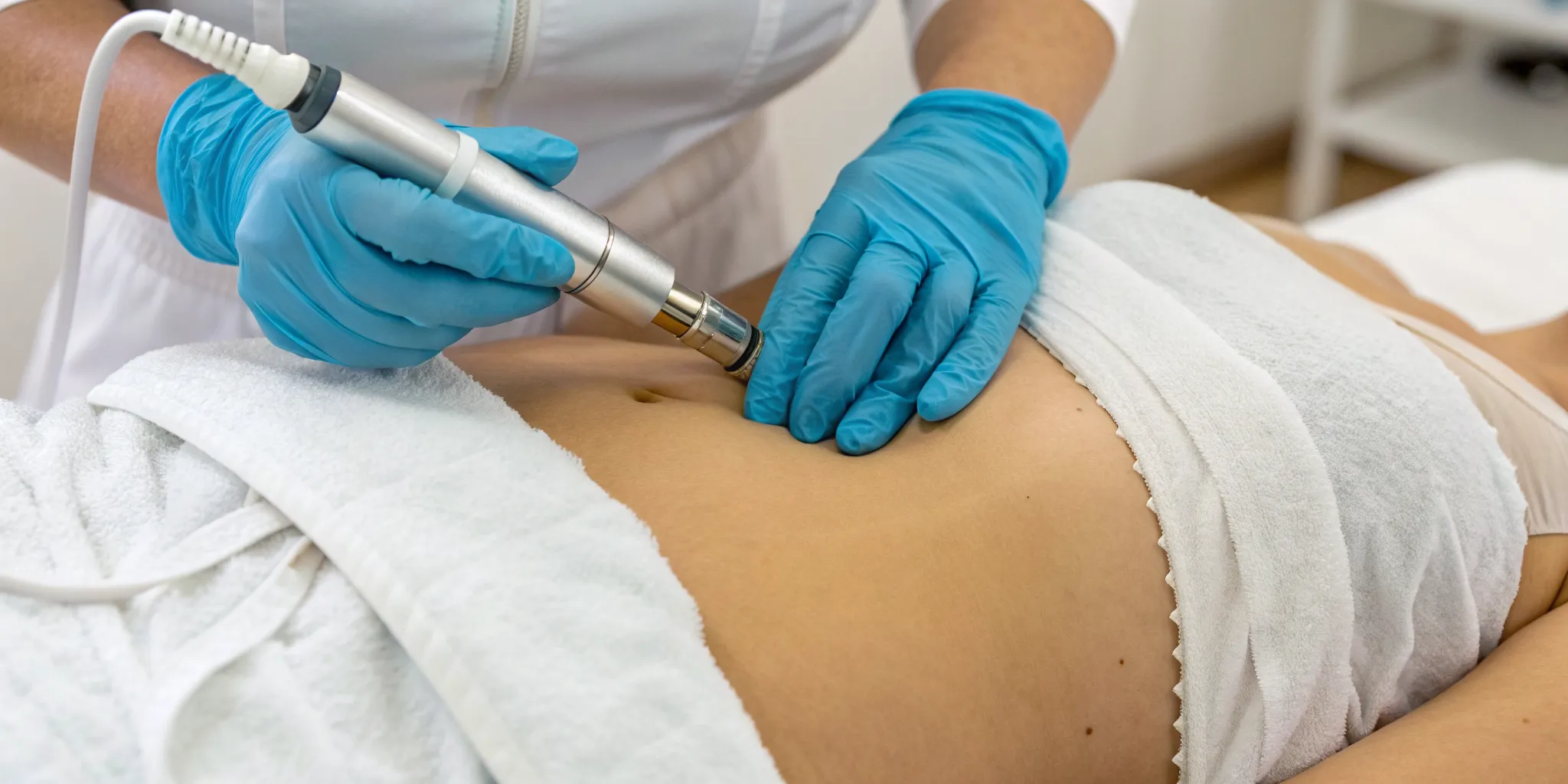
Venus Viva is a cutting-edge acne scar reduction laser that uses NanoFractional radio frequencies and magnetic pulses to penetrate deep into the skin and stimulate new collagen growth.
HydraFacial uses patented technology to deeply cleanse, exfoliate, hydrate, and stimulate new collagen growth, reducing inflammation and redness caused by acne scars.
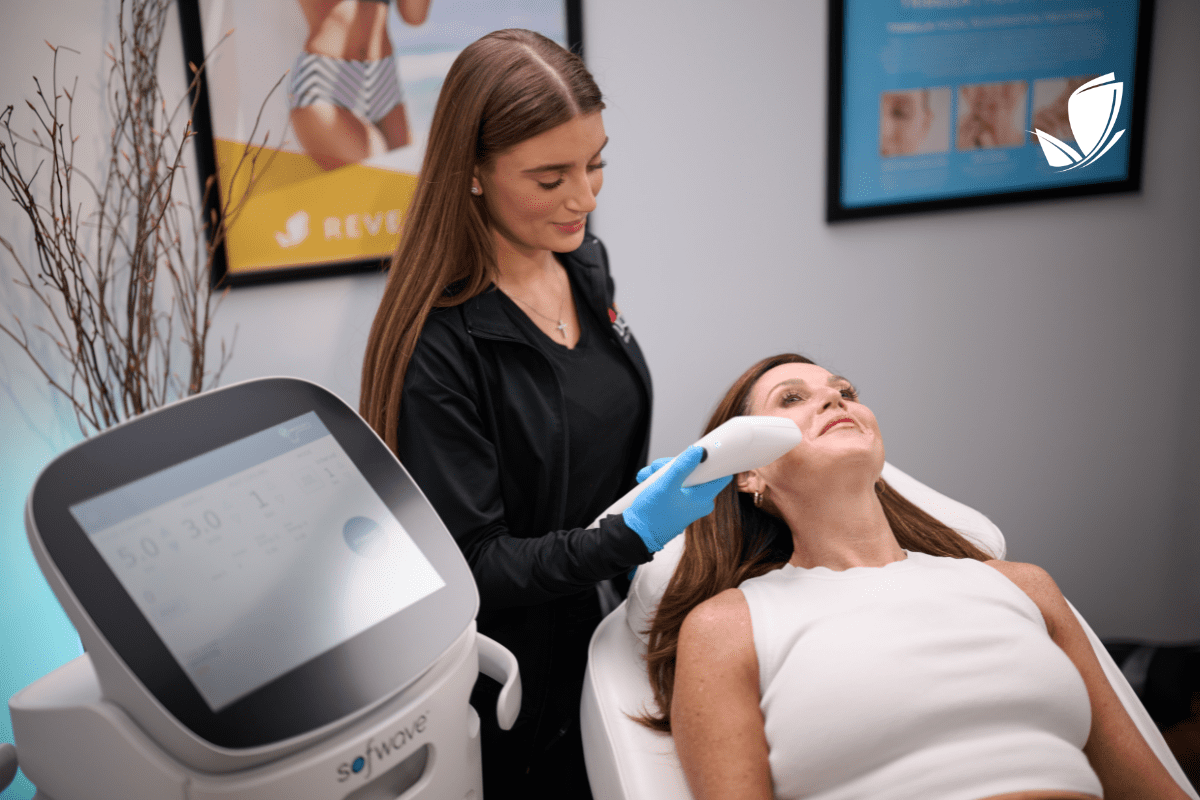
Sofwave uses ultrasound technology to improve the appearance of scars and other signs of aging. It penetrates deep into the skin, promoting healing and new collagen production.
Aerolase Neo Elite is an acne scar reduction treatment that uses a high-powered laser to penetrate deeply into the skin and break up scar tissue while increasing collagen production, reducing redness, inflammation, and the appearance of acne scars.
What to expect from acne scar reduction at LightRx
- At LightRx, we focus on skin remodeling. Because each person is unique, we start with a professional consultation to carefully evaluate your skin, the types of scars, and the number of treatments needed to reach your desired results.
Skin analysis helps our technician choose the best technologies and calibration based on your sensitivity and the depth of scarring.
- The target area is then cleaned and ready for treatment.
- The specific technology is then applied to your skin. You will feel quick, warm pulses like a pinprick as the laser moves across your skin. Multiple passes may be necessary over areas of deeper scarring to reach the dermal layer and stimulate collagen production.
- Post-treatment, your skin will look and feel like you have a mild sunburn. A calming serum is often applied to moisturize and soothe the skin.
Results timeline, maintenance, and skincare support
Weeks 1-2: Initial healing, skin looks brighter, but scars are still visible.
Month 2-3: New collagen production begins to soften scar edges
Months 3-6: Skin remodeling is at its peak with significant filling of depression scars after 3-6 treatment sessions.
MAINTENANCE: To keep your skin smooth and elastic, a yearly treatment is often recommended.
SKINCARE: Always wear sunscreen with an SPF of 30 or higher to shield against UV damage and hyperpigmentation. Hyaluronic acid or ceramides are great for supporting your results for about 3-5 days after treatment, but avoid retinol or Vitamin C during that time.