

The Truth About Acne Scar Reduction Treatments
If you’re tired of trying to cover up acne scars, I have good news: you don’t have to live with them forever. The first step is understanding what you’re actually treating. Many people confuse temporary discoloration with true textural scars, which are caused by a loss of collagen in the skin’s deeper layers. To see real improvement, you need treatments that can rebuild that foundation from the inside out. We’ll break down the different types of scars and explore the professional acne scar reduction methods that deliver the smooth, clear skin you’ve been wanting.
With all the advances in laser technology, you no longer have to deal with acne scars. There are professional skin treatments that provide great results.
Understanding What You’re Treating: Scars vs. Discoloration
Before you can find the right solution, you need to correctly identify the problem. What many people call “acne scars” are often just temporary discoloration marks left behind after a pimple heals. True acne scars involve a change in the skin’s texture, either a depression or a raised area, and they won’t fade on their own without intervention. Understanding whether you’re dealing with textural scars or simple discoloration is the first and most important step in creating an effective treatment plan and getting the smooth, clear skin you want.
True Textural Scars
Textural scars are permanent changes to the skin’s surface caused by damage to the collagen layer during an acne breakout. When a pimple becomes severely inflamed, it can destroy skin tissue. The body’s healing response can be imperfect, resulting in either too little or too much collagen, which creates the uneven texture we see as a scar. These types of scars require professional treatments that focus on remodeling the skin and stimulating new, healthy collagen growth to see significant improvement.
Atrophic (Depressed) Scars
Atrophic scars are the most common type of acne scar, appearing as indentations or pits in the skin. According to Healthline, these form when not enough collagen is produced during the healing process, causing a loss of tissue. You might hear them described as “ice pick” (deep, narrow pits), “boxcar” (broad depressions with defined edges), or “rolling” (wavelike depressions that make the skin’s surface look uneven). Because they are caused by a lack of collagen, treatments are aimed at rebuilding that underlying support structure.
Hypertrophic (Raised) Scars
The opposite of atrophic scars, hypertrophic scars are raised bumps of scar tissue that sit above the skin’s surface. These are less common and tend to appear more frequently on the chest and back. They occur when the body produces too much collagen in its attempt to heal the initial acne lesion. This overproduction creates a firm, raised mark that can sometimes be tender or itchy. Treatment for these scars focuses on breaking down the excess collagen and flattening the scar tissue to blend with the surrounding skin.
Post-Acne Discoloration Marks
Unlike true scars, these marks are flat and represent a change in skin color, not texture. They are the lingering evidence of past inflammation and, while frustrating, are not permanent. With the right at-home care and professional guidance, these marks can fade completely over time. The key is to identify which type of discoloration you have so you can use targeted ingredients and treatments to speed up the healing process and prevent them from getting darker.
Post-Inflammatory Erythema (PIE)
If you have pink or red spots left over after a pimple has healed, you’re likely dealing with Post-Inflammatory Erythema (PIE). As explained in a video by dermatologist Dr. Shereene Idriss, these marks are caused by damage or dilation of tiny blood vessels near the skin’s surface during the inflammatory phase of a breakout. PIE is most common in lighter skin tones and can be stubborn, but it isn’t a true scar. Gentle skincare and treatments that reduce redness are effective at clearing these marks.
Post-Inflammatory Hyperpigmentation (PIH)
Post-Inflammatory Hyperpigmentation (PIH) appears as brown or dark spots on the skin after acne has healed. This occurs when inflammation triggers an overproduction of melanin, the pigment that gives skin its color. PIH is more common in deeper skin tones and can be worsened by picking at pimples or by sun exposure, which is why daily sunscreen is non-negotiable. These marks can be treated effectively with ingredients that inhibit melanin production and encourage cell turnover, like vitamin C and exfoliating acids.
Setting Realistic Expectations for Treatment
When you’re ready to treat your acne scars, it’s easy to want immediate results. However, it’s important to approach the process with patience and realistic expectations. Treating textural scars is a long-term commitment because you are fundamentally remodeling your skin from the inside out. It involves breaking down old, damaged scar tissue and stimulating your body to create new, healthy collagen to replace it. This biological process simply takes time, and consistency is far more important than intensity when it comes to achieving lasting results.
Why Acne Scar Treatment Takes Time
Improving the appearance of textural acne scars is a marathon, not a sprint. As dermatologists often explain, a realistic timeline for significant improvement can be anywhere from 18 to 24 months. This is because treatments are designed to trigger your body’s natural healing and collagen production cycles, which are gradual. Each session builds upon the last, slowly filling in depressed scars and smoothing the skin’s surface. While discoloration can fade faster, true textural change requires a dedicated and patient approach to allow your skin the time it needs to regenerate and repair itself properly.
The Importance of a Combined Therapy Approach
There is no single magic bullet for treating acne scars. Research published by the National Center for Biotechnology Information confirms that the most effective strategy is often a combined therapy approach. This means using multiple types of treatments that work together to address scars from different angles. For example, a laser treatment might be used to resurface the top layer of skin while another procedure works deeper to stimulate collagen. This is why a professional consultation is so critical. A trained provider can assess your specific scar types and create a personalized plan that layers different skin rejuvenation therapies to give you the best possible outcome.
Why Aren’t My At-Home Scar Treatments Working?
Over-the-counter products that contain retinol, vitamin C, or AHAs are designed to work on the outermost layer of the skin, the epidermis. True scars are considered atrophic or pitted because they result from a loss of collagen in the deepest layer of the skin, the dermis. OTC acne scar treatments simply cannot re-plump the missing tissue at those depths. The most they can do is smooth the surface, leaving the pitted areas untouched. Home peels only remove the dead skin on the surface, leaving scars untouched, and dermarollers for at-home use are not recommended. They are too shallow to affect scar tissue and can cause track mark scarring or micro-tears if you’re not careful.
What Makes Acne Scar Tissue So Stubborn?
Acne scars usually have fibrous bands of tissue pulling the skin downward from underneath. No cream or serum can reduce acne scars because they can’t penetrate those tethered bands. Only professional lasers are capable of reaching those bands and breaking them down.
A Guide to Professional Acne Scar Treatments
When you’re ready to move beyond topicals and see real change in your skin’s texture, professional treatments are the answer. These procedures work deep within the skin to remodel collagen and break up the tough, fibrous tissue that creates scars. The right treatment for you depends on your scar type, skin tone, and desired outcome. A consultation with a trained medical spa technician is the best first step to create a personalized plan. They can assess your unique situation and recommend a single therapy or a combination of treatments to achieve the smoothest possible results for your skin.
Laser and Energy-Based Treatments
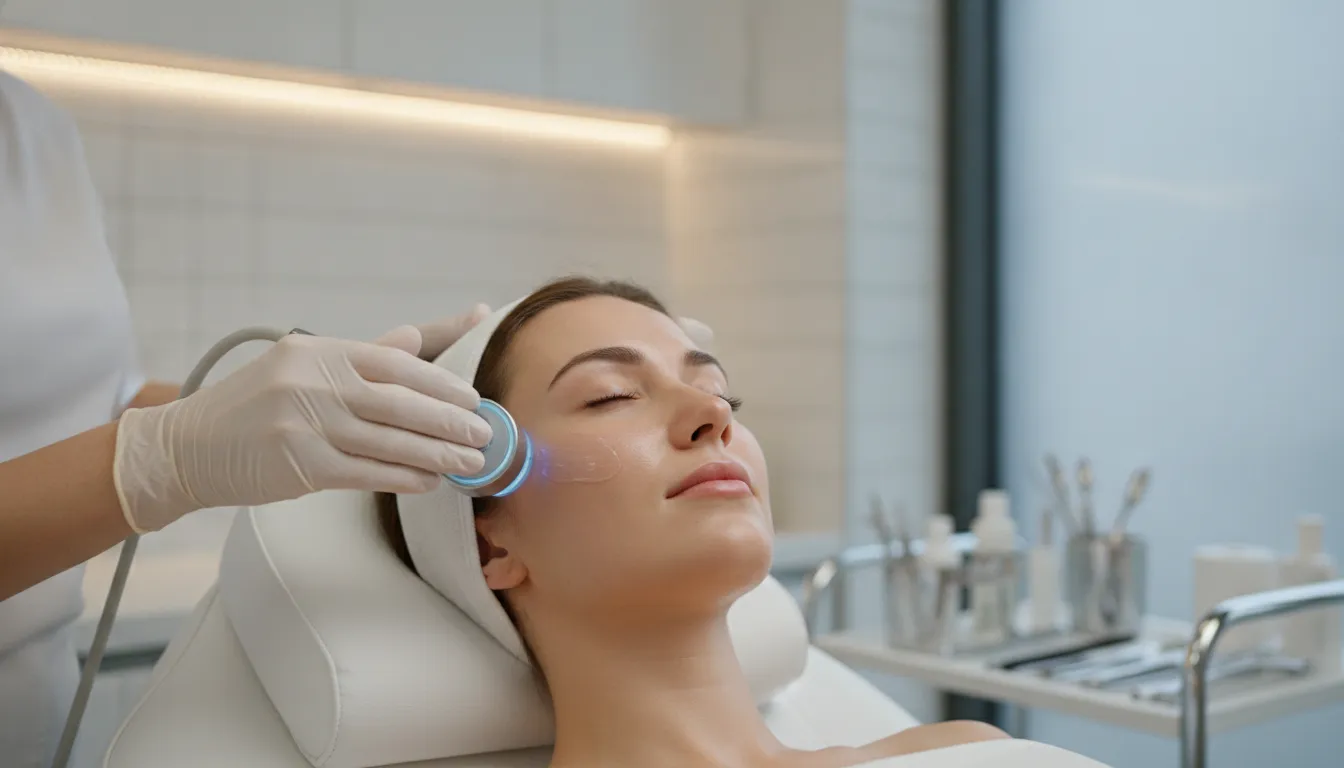
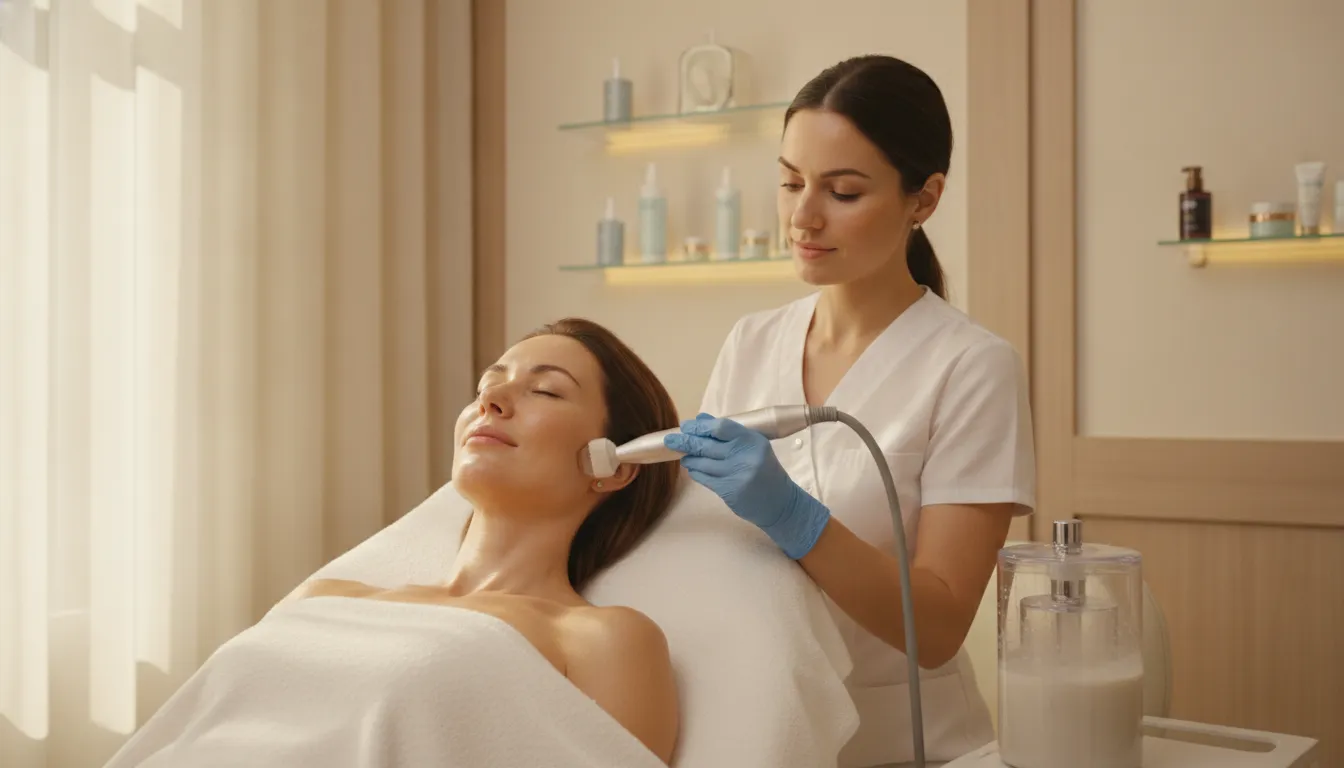
Laser treatments are one of the most effective ways to address acne scars. These advanced technologies use focused light and energy to target scar tissue beneath the skin’s surface, stimulating your body’s natural healing process to produce new, healthy collagen. This process helps to fill in depressed scars and improve overall skin texture and tone from the inside out. At LightRx, we use state-of-the-art skin rejuvenation technologies to safely and effectively reduce the appearance of acne scars. Because these treatments are non-invasive, you can achieve significant improvement with minimal downtime, making it a go-to option for many people looking for lasting results.
Ablative vs. Non-Ablative Lasers
When exploring laser options, you’ll hear the terms “ablative” and “non-ablative.” Ablative lasers, like CO2 lasers, work by removing thin outer layers of skin and heating the underlying tissue, which stimulates new collagen growth. This approach is very effective for severe scarring but comes with a longer recovery period. Non-ablative lasers are less invasive; they work by heating the tissue beneath the skin to stimulate collagen production without removing the surface layer. This means less downtime and a lower risk of side effects, making it a great choice for treating boxcar scars and reducing redness associated with scarring.
Professional Microneedling
Microneedling, also known as collagen induction therapy, is another powerful tool for treating atrophic acne scars. The procedure uses a device with fine, tiny needles to create controlled micro-injuries in the skin. This action triggers your body’s natural wound-healing response, which ramps up the production of new collagen and elastin. As the skin heals, it becomes firmer, smoother, and more even-toned, effectively plumping up depressed scars from below. One of the biggest advantages of microneedling is its safety profile for all skin tones, as it carries a much lower risk of causing pigmentation changes compared to some laser treatments.
Chemical Peels and Dermabrasion
For those dealing with more superficial scarring or uneven texture, professional exfoliation methods can make a noticeable difference. A professional-grade chemical peel uses a strong acid solution to remove the outermost layer of skin, revealing the smoother, healthier skin underneath and encouraging new cell growth. This can be effective for diminishing the appearance of shallower scars. Dermabrasion is a more intensive procedure where a technician uses a specialized rotating instrument to essentially “sand down” the top layers of skin. It’s typically reserved for more significant scarring and requires a skilled hand to achieve the best results.
Injectables for Acne Scars
Injectable treatments offer a targeted approach to immediately improve the appearance of certain types of acne scars. Instead of resurfacing the entire area, injectables work by either filling in a depression or relaxing the surrounding tissue to make a scar less noticeable. This method is particularly useful for isolated or deep-pitted scars that don’t respond as well to resurfacing treatments alone. Depending on the goal, different types of injectables can be used to provide volume or soften the tissue for a smoother look.
Dermal Fillers
If you have atrophic, or depressed, acne scars, dermal fillers can be a game-changer. A technician can inject a substance, often hyaluronic acid, directly into the scar to lift the depression and bring it level with the surrounding skin. The results are immediate, providing instant volume and a smoother surface. While many fillers are temporary and require maintenance treatments to preserve the effect, they offer a quick and effective solution for pockmarks and other indented scars without any downtime.
Botox and Steroid Injections
While we usually associate Botox with wrinkles, it can also help with certain acne scars. By injecting it into the tissue around a scar, it can relax the underlying muscles that may be pulling on the skin and making the scar more prominent. This can be especially helpful for scars in highly mobile areas of the face. On the other hand, for hypertrophic or keloid scars, which are raised and firm, steroid injections are the standard treatment. These injections work to break down the excess collagen and flatten the scar tissue, helping it blend more seamlessly with the surrounding skin.
Minor Surgical Techniques
For very deep, stubborn scars that are tethered to the underlying tissue, sometimes a minor surgical procedure is the most effective route. These techniques are performed by a dermatologist or plastic surgeon and are designed to physically release or remove the scar tissue that other treatments can’t reach. While they sound intense, these are typically quick, in-office procedures that can create a dramatic improvement, especially when used as a foundation for later resurfacing treatments like lasers or microneedling.
Subcision and Punch Excision
Subcision is a technique specifically for rolling, depressed scars that are anchored down by fibrous bands. A special needle is inserted beneath the skin to cut these tethers, releasing the scar and allowing the skin to rise back to a more normal level. Punch excision is used for deep “ice pick” or boxcar scars. In this procedure, the doctor uses a small, cookie-cutter-like tool to cut out the individual scar. The tiny wound is then closed with a fine suture, replacing the deep scar with a much smaller, less noticeable line that can often be further improved with laser treatments later on.
Why a Custom Approach to Acne Scars Matters
Every person’s scarring is unique, so the best results come from a personalized treatment plan designed by a professional. Atrophic or depressed scars: Commonly caused by a lack of collagen during the healing process of the acne lesions.
- Icepick scars are narrow, deep pits, as if the skin was punctured by a tiny icepick. They are dermal-level scars.
- Boxcar scars are round or oval indentations with steep, vertical sides.
- Rolling scars are broad, shallow marks that appear wavy or rolling. They typically result from fibrous bands being pulled down into the skin.
Hypertrophic & keloid (raised) scars: Excess collagen can lead to hypertrophic or keloid scars. These are firm, raised bumps on the skin’s surface and are most commonly found on the jawline, chest, and back. Why treatment must be customized The technology required for different types of scars can vary. Customization is the best way to get the results you desire. LightRx understands this, so we offer a combination therapy that utilizes multiple laser technologies to achieve your desired results. Our non-invasive treatments use radio frequencies and ultrasound technologies to promote new collagen growth, decrease inflammation and redness, and improve acne scars for healthier, smoother skin.
How Professional Acne Scar Reduction Actually Works
At LightRx, we use four technologies tailored to your specific needs. Venus Viva, HydraFacial, Sofwave, and Aerolase Neo Elite. Venus Viva is a cutting-edge acne scar reduction laser that uses NanoFractional radio frequencies and magnetic pulses to penetrate deep into the skin and stimulate new collagen growth. HydraFacial uses patented technology to deeply cleanse, exfoliate, hydrate, and stimulate new collagen growth, reducing inflammation and redness caused by acne scars. Sofwave uses ultrasound technology to improve the appearance of scars and other signs of aging. It penetrates deep into the skin, promoting healing and new collagen production. Aerolase Neo Elite is an acne scar reduction treatment that uses a high-powered laser to penetrate deeply into the skin and break up scar tissue while increasing collagen production, reducing redness, inflammation, and the appearance of acne scars.
Preventing Future Scars and Important Considerations
How to Prevent Acne Scars from Forming
The most effective way to treat an acne scar is to prevent it from ever appearing. This starts with one golden rule: do not pick, pop, or squeeze your pimples. I know it’s tempting, but every time you apply that pressure, you risk forcing debris and bacteria deeper into the dermis. This can cause intense inflammation that damages the skin’s underlying structure, destroying collagen and elastin. That damage is what ultimately leads to a scar. The less you touch, the better your skin can heal properly. Managing your breakouts with a consistent skincare routine is your first line of defense, as fewer pimples mean fewer opportunities for scars to form.
Treatment Risks for Different Skin Tones
Your skin tone plays a significant role in determining the safest and most effective treatment path. Certain powerful treatments, like some types of laser resurfacing, carry a higher risk for people with darker skin or those who are prone to forming keloids (raised scars). The energy from these devices can sometimes interact with melanin, potentially leading to hyperpigmentation or other changes in skin color. This is why a one-size-fits-all approach just doesn’t work. A professional consultation is essential to assess your unique skin type and scar characteristics to create a personalized plan. At LightRx, our experts design customized treatment strategies that deliver results safely for every skin tone.
Your Treatment Timeline: From Consultation to Results
- At LightRx, we focus on skin remodeling. Because each person is unique, we start with a professional consultation to carefully evaluate your skin, the types of scars, and the number of treatments needed to reach your desired results.
Skin analysis helps our technician choose the best technologies and calibration based on your sensitivity and the depth of scarring.
- The target area is then cleaned and ready for treatment.
- The specific technology is then applied to your skin. You will feel quick, warm pulses like a pinprick as the laser moves across your skin. Multiple passes may be necessary over areas of deeper scarring to reach the dermal layer and stimulate collagen production.
- Post-treatment, your skin will look and feel like you have a mild sunburn. A calming serum is often applied to moisturize and soothe the skin.
Results timeline, maintenance, and skincare support Weeks 1-2: Initial healing, skin looks brighter, but scars are still visible. Month 2-3: New collagen production begins to soften scar edges Months 3-6: Skin remodeling is at its peak with significant filling of depression scars after 3-6 treatment sessions. MAINTENANCE: To keep your skin smooth and elastic, a yearly treatment is often recommended. SKINCARE: Always wear sunscreen with an SPF of 30 or higher to shield against UV damage and hyperpigmentation. Hyaluronic acid or ceramides are great for supporting your results for about 3-5 days after treatment, but avoid retinol or Vitamin C during that time. Book your free consultation today!
Frequently Asked Questions
How can I tell if I have a true scar or just a temporary mark? The easiest way to tell is by looking at the texture of your skin. If the mark is completely flat but has a pink, red, or brown color, you’re likely dealing with post-inflammatory discoloration (PIE or PIH), which can fade over time. If you see a physical indentation or a raised bump, that’s a true textural scar caused by damage to the skin’s deeper collagen layer, and it will require professional treatment to improve.
Why aren’t my at-home treatments or creams making a difference on my indented scars? Most over-the-counter products are designed to work on the skin’s surface. They can be great for improving discoloration or overall brightness. However, indented scars are a deeper issue; they are caused by a loss of collagen far below the surface. Topical creams simply can’t penetrate deep enough to rebuild that lost tissue. Professional treatments are needed to reach into those deeper layers and stimulate the new collagen growth required to actually fill in the scar.
What does a professional acne scar treatment actually feel like? This depends on the specific technology used, but most clients describe the sensation as quick, warm pulses on the skin, almost like a tiny pinprick. It’s generally very tolerable. Afterward, your skin will likely look and feel like it has a mild sunburn for a short time. A technician will apply a soothing serum to help calm and moisturize the area right after the session.
Is there one ‘best’ treatment for all acne scars? There isn’t a single magic-bullet treatment because scars are not one-size-fits-all. A deep, narrow “ice pick” scar requires a different approach than a wider, wavelike “rolling” scar. The most effective results almost always come from a personalized plan that may combine different technologies to address your specific scar types, skin tone, and goals. This is why a professional consultation is the most important first step.
How long do I have to wait to see a real improvement in my skin’s texture? Patience is key because you are fundamentally remodeling your skin. While you might notice some initial brightness, the real textural changes happen gradually. It takes time for your body to break down old scar tissue and generate new, healthy collagen to smooth the surface. Most people see significant improvement after a series of 3 to 6 treatments, with the most noticeable results appearing between three and six months as that new collagen builds up.
Key Takeaways
- Know what you’re treating: The first step is to distinguish between true textural scars, which are permanent indentations, and temporary discoloration marks. Textural scars require professional treatments to rebuild collagen from within.
- Professional help is essential for texture: At-home products can’t repair the deep collagen damage that causes pitted scars. To see real change, you need professional procedures like lasers or microneedling that work beneath the skin’s surface to remodel tissue.
- A custom plan is your best strategy: There is no one-size-fits-all solution for acne scars. The most effective results come from a personalized treatment plan, often combining different therapies, designed by a professional to address your specific scar types and skin tone.