

How Body Contouring Improves Results After Weight Loss
You’ve accomplished something amazing by losing a significant amount of weight. You feel healthier, stronger, and more energetic than ever. Yet, you might also be dealing with the frustrating reality of excess skin, which can cause physical discomfort and create an emotional disconnect. It’s a common experience to feel like your outer appearance hasn’t quite caught up with your inner transformation. If you’re wondering what comes next, you’re not alone. The crucial question is, how can body contouring treatments improve after significant weight loss and help you cross the finish line? We’ll explore the different paths you can take, comparing the realities of surgical procedures with the benefits of non-invasive technologies that help you achieve the silhouette you’ve worked so hard for.
What is Non-surgical Body Contouring?
Body contouring is a combination of multiple treatments in order to reach an all-encompassing body image. This can include, but is not limited to, laser lipo, skin tightening treatments and cellulite removal. If there are a host of things that you would like to change about your body, then creating a body contouring plan with us will set you on the path for a better body. We can help you fit into your favorite jeans again or fill out your favorite bikini. If you just want to feel more confident when you look in the mirror, we have treatments that can help you. The best part is that all of our treatments are non-invasive and come with no downtime. This significantly reduces the chance for any serious or adverse side effects and makes it much more convenient for you as you will be able to leave our clinic after a treatment and return to normal activities immediately. This is especially true when compared to more invasive methods of body contouring, which often comes with the risk of infections or organ damage and requires downtime for recovery meaning you could miss days or even weeks of work or whatever other responsibilities you may have.
What Happens to the Skin After Weight Loss?
The skin is not just a lay or protective material surrounding the body, it is itself its own living organ composed of millions of individual cells, and we need to treat it as such. When we gain weight, the skin stretches and when we lose weight it shrinks. However, if we lose a lot of weight very quickly it may take a while for the skin to catch up with the rapid pace at which the body is changing, and you will be left with a lot of loose skin. This is completely natural although if you are trying to lose weight and improve your appearance having a lot of loose skin can be disheartening. The surface level skin cells die off and are replaced nearly every day all the time, but the cells on the deeper layers of the skin are not replaced nearly as often. As a result, when you lose weight very quickly the elasticity of the skin is temporarily weakened, and post weight loss skin can be flabby and loose.
The Surgical Option
If you are looking for options for body contouring after weight loss, there are a couple avenues for dealing with the loose skin following weight loss. One of those options is surgery. There are surgical treatments such as arm lifts and tummy tucks that are designed to reduce the amount of loose skin. Most of these treatments involve being put under anesthesia and having the excess fat and skin cut off of the body and the remaining skin stretched and stitched back together. These surgeries come with all the risks of surgery such as infections, scarring, bleeding, damage to organs, damage to muscles, persistent pain, and fluid accumulation. Along with these risks also comes downtime. The body may need days or even weeks following a surgical treatment of this nature in order to bounce back and be able to return to normal activities such as work.
The Surgical Path to Body Contouring After Weight Loss
For some, the journey of significant weight loss reveals a new challenge: excess skin. When diet and exercise aren’t enough to address the loose skin left behind, surgical body contouring becomes a potential next step. This path involves invasive procedures performed by a plastic surgeon to remove excess skin and fat, reshaping the body to reflect the incredible weight loss achieved. It’s a major decision that requires careful consideration of the physical and emotional needs, the criteria for candidacy, the types of procedures available, and the realities of a long recovery process. Understanding the full scope of the surgical route is essential for anyone considering it as the final chapter in their transformation story.
The Medical and Psychological Need for Surgery
Physical Discomfort and Health Issues
Losing a substantial amount of weight, often 100 pounds or more, is a monumental achievement. However, the skin, which has been stretched for a long period, often loses its elasticity and cannot shrink back to fit the body’s new, smaller size. This results in large folds of loose skin that can cause significant physical issues. This excess skin is not just a cosmetic concern; it can be heavy, painful, and make simple movements difficult. Furthermore, the skin folds can trap moisture, leading to chronic rashes, chafing, and even serious skin infections that require medical attention. For many, surgery becomes a necessary step to alleviate these painful and persistent physical problems.
Mental and Emotional Impact
The emotional toll of excess skin can be just as challenging as the physical discomfort. After working so hard to lose weight and adopt a healthier lifestyle, being left with a body that doesn’t reflect that success can be deeply disheartening. Many people report still feeling “fat” or self-conscious, unable to wear the clothes they want or feel comfortable in their own skin. This can create a frustrating disconnect between their internal sense of accomplishment and their external appearance. For these individuals, body contouring surgery is often seen as the final, affirming step in their weight loss journey, helping to finally align their physical self with their hard-won health and new identity.
Who is a Good Candidate for Surgical Procedures?
Stable Weight and Overall Health
Deciding to undergo body contouring surgery is a significant step, and surgeons have strict criteria to ensure patient safety and successful outcomes. The most important factor is weight stability. Ideal candidates have maintained their goal weight for at least one to two years. This demonstrates a commitment to a healthy lifestyle and ensures that the body is in a stable state, which is crucial for the longevity of the surgical results. Going through a major procedure only to have the results altered by subsequent weight fluctuations is something everyone wants to avoid. Your overall health must also be good, without any medical conditions that could impair healing or increase surgical risk.
Healthy BMI and Non-Smoker Status
While you have already lost a significant amount of weight, surgeons will look for you to be at or near your ideal body weight, often reflected by your Body Mass Index (BMI). Patients with a lower BMI generally experience fewer complications and tend to have more predictable and satisfactory results. Just as important is your smoking status. Being a non-smoker is typically a non-negotiable requirement. Smoking severely restricts blood flow, which can dramatically impede healing, increase the risk of infection, and lead to tissue death and more prominent scarring. Most surgeons will require you to quit smoking for a significant period before and after the procedure.
Realistic Expectations About Scars and Results
A crucial part of being a good candidate is having realistic expectations. It’s important to understand that body contouring surgery is about improvement, not perfection. The goal is to create a smoother, more natural body contour, but it will not transform your body into that of someone who was never overweight. A frank conversation with your surgeon about what is realistically achievable is essential. You must also be prepared for the trade-off: the removal of excess skin results in long, permanent scars. While surgeons are skilled at placing incisions in less conspicuous areas, the scars will always be there. Accepting this reality is a key part of being mentally prepared for the outcome.
Types of Surgical Body Contouring Procedures
Circumferential Body Lift
A circumferential body lift, also known as a lower body lift, is one of the most extensive body contouring procedures. It is designed to address excess skin and fat around the entire lower torso in a single operation. The incision typically runs around the body like a belt, allowing the surgeon to remove a large apron of skin and fat from the abdomen, while also lifting and tightening the buttocks, hips, and outer thighs. This procedure provides a dramatic improvement to the entire lower body, creating a much smoother and more defined silhouette. Due to its extensive nature, it involves a significant recovery period.
Panniculectomy
A panniculectomy is a surgical procedure specifically designed to remove the pannus—the large apron of skin and fat that hangs down from the lower abdomen, sometimes covering the groin and thighs. Unlike a tummy tuck, which also tightens the underlying abdominal muscles for a cosmetic result, a panniculectomy is primarily a functional procedure. It is often considered medically necessary to resolve issues like chronic rashes, infections, and ulcers that form in the skin fold. While it does create a flatter abdominal profile, its main purpose is to relieve the physical symptoms caused by the overhanging skin.
Brachioplasty (Arm Lift) and Thigh Lifts
Significant weight loss often leaves behind loose, sagging skin on the limbs. A brachioplasty, or arm lift, targets the excess skin on the upper arms, often referred to as “bat wings.” During this procedure, a surgeon makes an incision, typically from the armpit to the elbow, to remove a crescent of skin and fat, resulting in a tighter and more toned arm contour. Similarly, a thigh lift addresses sagging skin on the inner and/or outer thighs. Both procedures are very effective at improving the shape of the limbs but do result in long scars that are a necessary trade-off for the improved contour.
Mastopexy (Breast Lift) and Facelift
Weight loss affects the entire body, and the breasts and face are no exception. After losing a large amount of weight, breasts can lose volume and appear deflated and saggy. A mastopexy, or breast lift, removes excess skin and reshapes the breast tissue to create a firmer, more youthful, and lifted position on the chest. In some cases, it may be combined with an implant to restore lost volume. Likewise, the face can lose volume and develop sagging skin, jowls, and a “turkey neck.” A facelift and neck lift can remove this excess skin and tighten the underlying structures to restore a more defined and refreshed facial appearance.
The Realities of the Surgical Process and Recovery
Major Surgery and Hospital Stays
It is critical to understand that body contouring after massive weight loss is not a set of minor cosmetic tweaks. These are major surgical procedures that carry significant risks and require extensive planning. Unlike many outpatient cosmetic treatments, these operations are performed under general anesthesia and almost always require a hospital stay of at least one night, and often several days. This allows the medical team to monitor your initial recovery, manage pain, and watch for any immediate complications. The decision to proceed should be made with a full understanding of the seriousness of the undertaking and the commitment required for a safe outcome.
The Recovery Timeline and Post-Op Care
Recovery from body contouring surgery is a marathon, not a sprint. Immediately after surgery, you can expect to have temporary drainage tubes in place to prevent fluid buildup, and you will be wearing compression garments to help control swelling and support the healing tissues. While you will see an immediate change in your body shape, the final results will be obscured by significant swelling and bruising for weeks or even months. According to experts at Yale Medicine, a full recovery can take a long time. Pain management, wound care, and strict adherence to activity restrictions are all part of the process. Following your surgeon’s post-operative instructions is not just a suggestion—it is essential for your safety and achieving the best possible result.
Body Contouring at LightRx
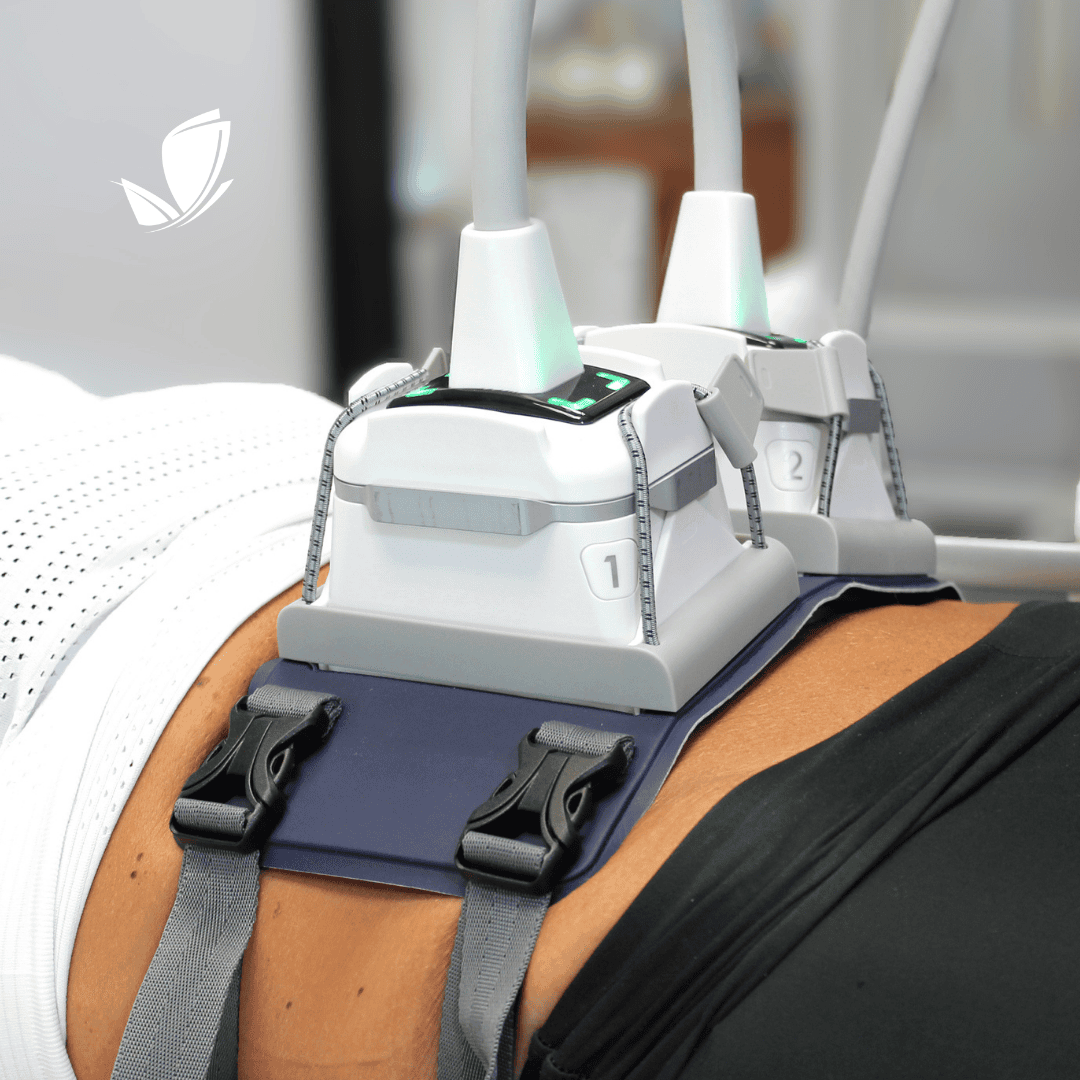
At LightRx we offer a nonsurgical, noninvasive alternative to body contouring after weight loss. Our skin tightening treatments are non-invasive, and are performed with low-level lasers, radio frequencies, and electromagnetic waves. Instead of risking the dangers of going under the knife we simply heat the skin to a safe temperature. This heating triggers the body’s natural healing process that creates skin fibers to tighten the skin. These options when compared to surgical methods are much safer and can have equally drastic results. Not to mention they are often much more affordable than surgery because there is no need to pay for all the complexities and accoutrements that come with surgery. Plus, when considering the opportunity cost of the downtime that comes with surgery compared to the no downtime that comes with a noninvasive treatment the cost comparison is not even close.
Schedule a Free Consultation
If you would like to know more about pricing, treatment length, and if nonsurgical body contouring is right for you, you can book a free consultation at the nearest LightRx location to you. The number of treatments will be determined during your free consultation and will depend on your desired result for your skin and the area being targeted. The best way to know exactly what treatment is right for you is by calling us at 877-721-4547 and scheduling a consultation in one of our offices. These consultations take as little as 30 minutes and are private one on one consultations with the clinic director.
Frequently Asked Questions
Is non-surgical body contouring a good alternative to surgery for loose skin? It depends on your specific situation and goals. Non-surgical treatments, like the ones we offer at LightRx, are excellent for addressing mild to moderate skin laxity by using technology to encourage your body’s natural collagen production. This tightens the skin over time. Surgical procedures, on the other hand, physically remove large amounts of excess skin and are better suited for more severe cases often seen after massive weight loss.
How do I know if I’m a better candidate for surgical or non-surgical body contouring? A great first step is a consultation. Generally, if you have a significant amount of hanging skin that causes physical discomfort or health issues, a surgeon might recommend a procedure like a tummy tuck or arm lift. If your concerns are more about improving skin firmness, reducing small pockets of stubborn fat, or smoothing cellulite after your weight loss, non-surgical options are likely a fantastic fit.
What does “non-invasive” actually mean for a treatment? Non-invasive means the treatment is performed without breaking the skin. Unlike surgery, which involves incisions and anesthesia, our treatments at LightRx use technologies like radiofrequency or lasers on the surface of your skin. This process heats the deeper layers to trigger a healing response that tightens and firms the area, all without any needles, scalpels, or recovery time.
Will non-surgical body contouring help me lose more weight? It’s important to clarify that body contouring treatments are not weight loss procedures. They are designed to shape and refine the body you’ve already worked hard to achieve. These treatments target concerns like skin laxity and stubborn fat pockets that don’t respond to diet and exercise, helping to create a smoother and more toned silhouette. You should be at or near your goal weight to see the best results.
How long does it take to see results from non-surgical treatments? Results can vary because these treatments rely on your body’s natural healing process. Some people notice an immediate improvement in skin tightness after a session, but the most significant changes appear gradually over several weeks and months. As your body produces new collagen and elastin fibers, the treated area will become firmer and smoother. We create a personalized treatment plan for every client to ensure the best possible outcome.
Key Takeaways
- Explore your post-weight loss options: You can address loose skin through two main paths: major surgical procedures like tummy tucks and arm lifts, or non-invasive treatments that use advanced technology to tighten skin without surgery.
- Recognize that surgery is a major commitment: Surgical body contouring involves strict health requirements, a stable weight, permanent scarring, and a long, intensive recovery period that requires significant downtime.
- Consider non-invasive treatments for a safer approach: Technologies like those used at LightRx utilize heat and radiofrequency to stimulate your body’s natural skin-tightening response, offering a more affordable and convenient alternative with no recovery time.


