
Acne Scar Removal: Treatments That Actually Work
If you’re tired of trying to cover up the uneven texture left behind by old breakouts, it’s time to get proactive. Achieving smoother, clearer skin is entirely possible, but it starts with understanding your options and creating a solid plan. This guide is your complete roadmap. We will cover everything from the best over-the-counter ingredients that can make a difference to the professional acne scar removal treatments that deliver truly significant results. Let’s explore the proven solutions that can help you finally achieve the smooth complexion you’ve been working towards.
What are acne scars?
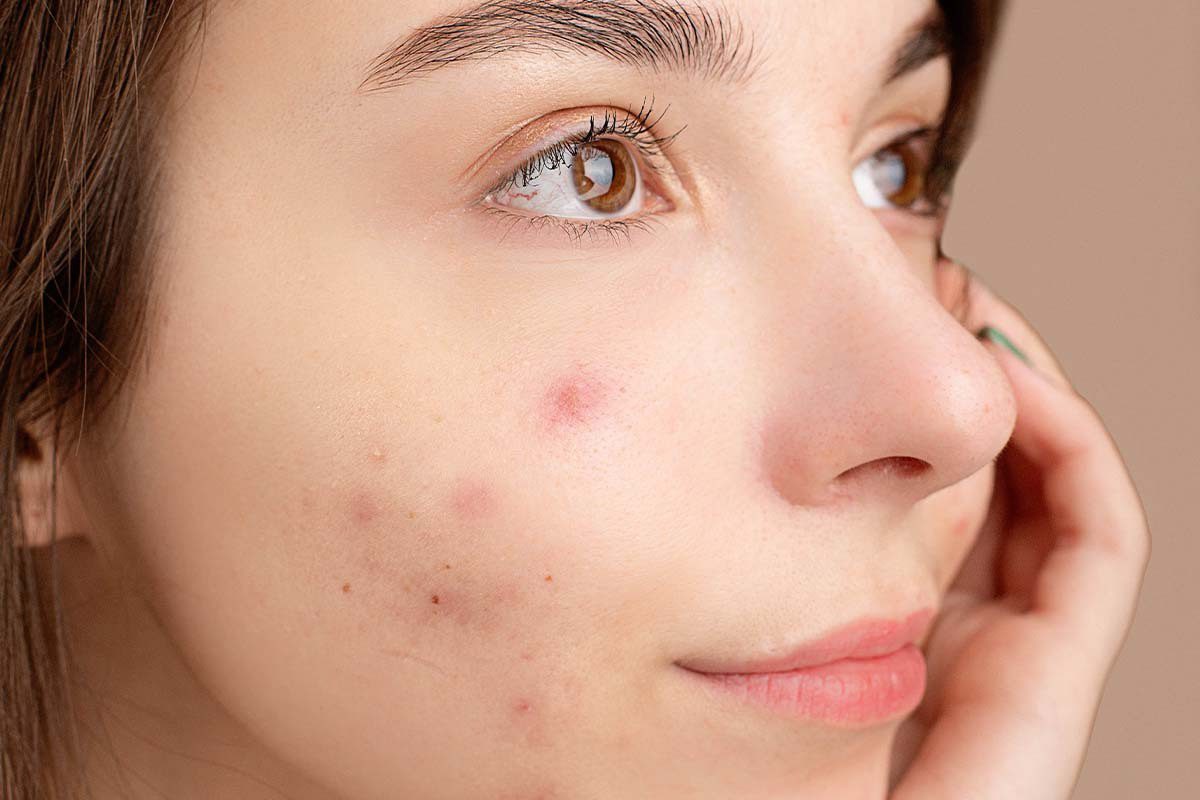
Acne scars are the result of inflamed acne blemishes. When acne pores swell there is a breakdown in the walls of the pore. This breakdown can cause damage that the body needs to heal. Sometimes it is small, and the scars created are not noticeable and heal quickly. Sometimes the damage to the walls is more extensive and the contents of the acne pore spill into the surrounding skin causing deeper scars. There are two main types of acne scars. The first is indented which occurs when a scar develops due to a loss of tissue. The second is raised scar, which develops due to an over activity of collagen creation during healing. ### Understanding Acne Scars vs. Temporary Marks First things first, let’s clear up a common point of confusion. Not every mark left behind by a pimple is a permanent scar. If you’ve ever had a blemish heal only to leave a stubborn pink, red, or brown spot, you’re likely dealing with post-inflammatory hyperpigmentation, or PIH. According to the Mayo Clinic, this discoloration is a result of inflammation during the skin’s healing process. The good news is that PIH isn’t a true scar and often fades over time on its own. However, for those more persistent spots that seem to hang around forever, professional skin rejuvenation treatments can help even out your skin tone and restore your complexion’s clarity much faster. ### Types of Depressed (Atrophic) Acne Scars Depressed, or atrophic, scars are the most common type of acne scar, especially on the face. They form when there’s a loss of tissue as a blemish heals, creating an indentation in the skin. Think of it as the skin not quite filling back in to its original smoothness after the inflammation has subsided. These scars can vary quite a bit in their appearance, from very narrow and deep to wide and shallow. Understanding which type you have is the first step toward finding the most effective treatment plan. There are three main kinds of atrophic scars you might recognize. #### Ice Pick Scars Just as their name suggests, ice pick scars are small, deep, and narrow pits in the skin. They can look as if the skin was punctured by a tiny, sharp object. Because they extend deep into the dermis, the American Academy of Dermatology notes that they are often considered the most challenging type of acne scar to treat. Their depth makes it difficult for the skin to regenerate enough collagen from the base to fill them in completely, which is why they often require targeted professional treatments to see significant improvement in skin texture. #### Boxcar Scars Boxcar scars are wider than ice pick scars and have more defined, almost sharp, edges. These round or oval depressions create a box-like appearance on the skin’s surface. According to the Cleveland Clinic, they are commonly found on the lower cheeks and jawline, where the skin is a bit thicker. Boxcar scars can be either shallow or deep, and they result from widespread inflammation from an acne lesion destroying collagen, which leads to a loss of tissue support and the subsequent sunken appearance on the skin. #### Rolling Scars Unlike the sharp edges of boxcar scars, rolling scars have smooth, sloped edges that make the skin’s surface look wavy or uneven. These scars are typically wide and shallow, and their appearance is caused by damage under the skin’s surface. Fibrous bands of tissue can develop between the skin and the subcutaneous tissue below, pulling the epidermis down from within. This tethering effect is what creates the rolling, undulating texture on the skin, which can become more noticeable as the skin ages and loses its natural elasticity. ### Types of Raised (Hypertrophic) Acne Scars While most acne scars cause a depression in the skin, some do the opposite. Raised, or hypertrophic, scars form when the body’s healing mechanism goes into overdrive and produces too much collagen. Instead of just filling in the wound, this excess collagen creates a firm, raised bump on the skin’s surface where the acne lesion once was. These types of scars are less common on the face and are more frequently seen on the body, particularly on the chest, back, and shoulders. They can sometimes be tender, itchy, or painful. #### Hypertrophic and Keloid Scars It’s helpful to know the difference between hypertrophic scars and keloids, as they are often grouped together. A hypertrophic scar is a raised scar that stays within the boundaries of the original acne blemish. A keloid scar, on the other hand, is more aggressive. It not only becomes a raised bump but also grows beyond the edges of the initial spot, spreading into the surrounding healthy skin. Keloids can continue to grow over time and are often more challenging to manage than hypertrophic scars. ### What Causes Acne to Scar? So, why do some people scar from acne while others don’t? Several factors come into play. The biggest culprit is severe, inflammatory acne—think deep, painful cysts and nodules that damage the deeper layers of your skin. Genetics also plays a major role; if your parents had acne scars, you might be more prone to them as well. But one of the most significant and controllable factors is your own behavior. Picking, popping, or squeezing blemishes dramatically increases inflammation and can damage the delicate tissue, seriously raising your risk of developing a permanent scar. The best defense is a good offense: properly managing your acne can prevent deep-seated inflammation and reduce the likelihood of scarring down the road.
Can you prevent acne scars?
The best and only way to truly prevent acne scarring is to prevent acne. Having a good skin care routine and keeping your skin clean will help with that. If you have acne, then you are at risk for acne scarring, and the less acne you have the less risk of scarring you will have.
What can get rid of acne scars?
There are several ways to reduce the visibility of acne scars, but scarring is permanent, and no scar will ever truly be removed. Some of these treatments work better than others and some do not work at all. The best treatments will make your scars nearly invisible.
At-Home and Over-the-Counter Options
Before exploring professional treatments, many people start with options they can find at the local drugstore or online. These at-home products can be a great first step, especially for addressing the discoloration and minor textural changes left behind by acne. When you’re scanning the aisles, look for products with active ingredients known to help with skin cell turnover and exfoliation. Key ingredients to search for include retinoids, which help speed up cell regeneration, as well as alpha-hydroxy acids (AHAs) like lactic acid and glycolic acid. Salicylic acid, a beta-hydroxy acid (BHA), is also effective because it exfoliates deep within the pores. These ingredients work by sloughing off the top layer of dead skin, which can gradually improve the appearance of superficial scars.
One of the most crucial, yet often overlooked, steps in any scar treatment plan is daily sun protection. Applying a broad-spectrum sunscreen with an SPF of 30 or higher every single day is non-negotiable. Sun exposure can darken scars, causing post-inflammatory hyperpigmentation that makes them stand out more against your natural skin tone. Diligent sunscreen use protects your skin from further damage and prevents your scars from becoming more noticeable, ensuring that the active ingredients in your other products can work as effectively as possible. Think of it as protecting the investment you’re making in your skin’s health and appearance.
It’s important to set realistic expectations for what at-home care can achieve. While over-the-counter products can certainly make a difference for surface-level discoloration and very shallow scars, they typically lack the strength to correct deep, indented scars like ice pick or boxcar types. These types of scars originate in the deeper layers of the skin, where topical creams and serums can’t reach. If you’ve been consistent with an at-home routine and aren’t seeing the results you want, it may be time to consider professional treatments. Services like skin rejuvenation are designed to address scarring on a more significant level for more dramatic and lasting improvement.
Home remedies
Most home remedies are ineffective or minimally effective at best. You can use sunscreen to limit the contrast between the normal skin and the scar tissue. Furthermore, research has shown that almond oil, cocoa butter, olive oil, and vitamin E did nothing to remove scarring and any oil-based remedies might cause more acne. Additionally, you can cover the scars with makeup or facial hair which will camouflage the scarring.
Topical solutions
There are some topical solutions that have been shown to reduce the noticeability of scarring. Any cream with Retinol, lactic acid, alpha hydroxy acids, or salicylic acid has been shown to be effective. These acids work by breaking down collagen fibers in the scars and promote the growth of newer healthy collagen fibers. These products do not work the same for everyone and some experimentation might be needed to find the one that works best for you.
Steroid Injections
Some acne scars can be treated by cortisone steroid injections. To treat acne, it is injected directly into the affected area. Once injected it works to reduce inflammation. This kind of treatment does not work for everyone and is not effective for every kind of acne scarring.
Professional Acne Scar Treatments
When over-the-counter products and at-home remedies don’t deliver the results you’re looking for, it might be time to explore professional treatments. These procedures are designed to work on a deeper level, targeting the underlying structure of the scar tissue to remodel the skin for a smoother, more even appearance. Because every person’s skin and scarring is unique, the best first step is always to schedule a free consultation with a treatment specialist. They can assess your specific type of scarring and recommend a personalized plan to help you achieve your skin goals safely and effectively.
Laser Resurfacing
Laser treatments are an advanced solution that uses focused light and heat to improve the skin’s texture and appearance. There are two main approaches. Ablative lasers work by carefully removing the thin, outer layer of skin and heating the underlying tissue to stimulate new collagen growth. As the area heals, the new skin that forms is smoother and firmer. Non-ablative lasers are less invasive; they work by heating the deeper layers of skin to promote collagen production without harming the surface. This type of skin rejuvenation typically involves less downtime but may require more sessions to see optimal results.
Microneedling
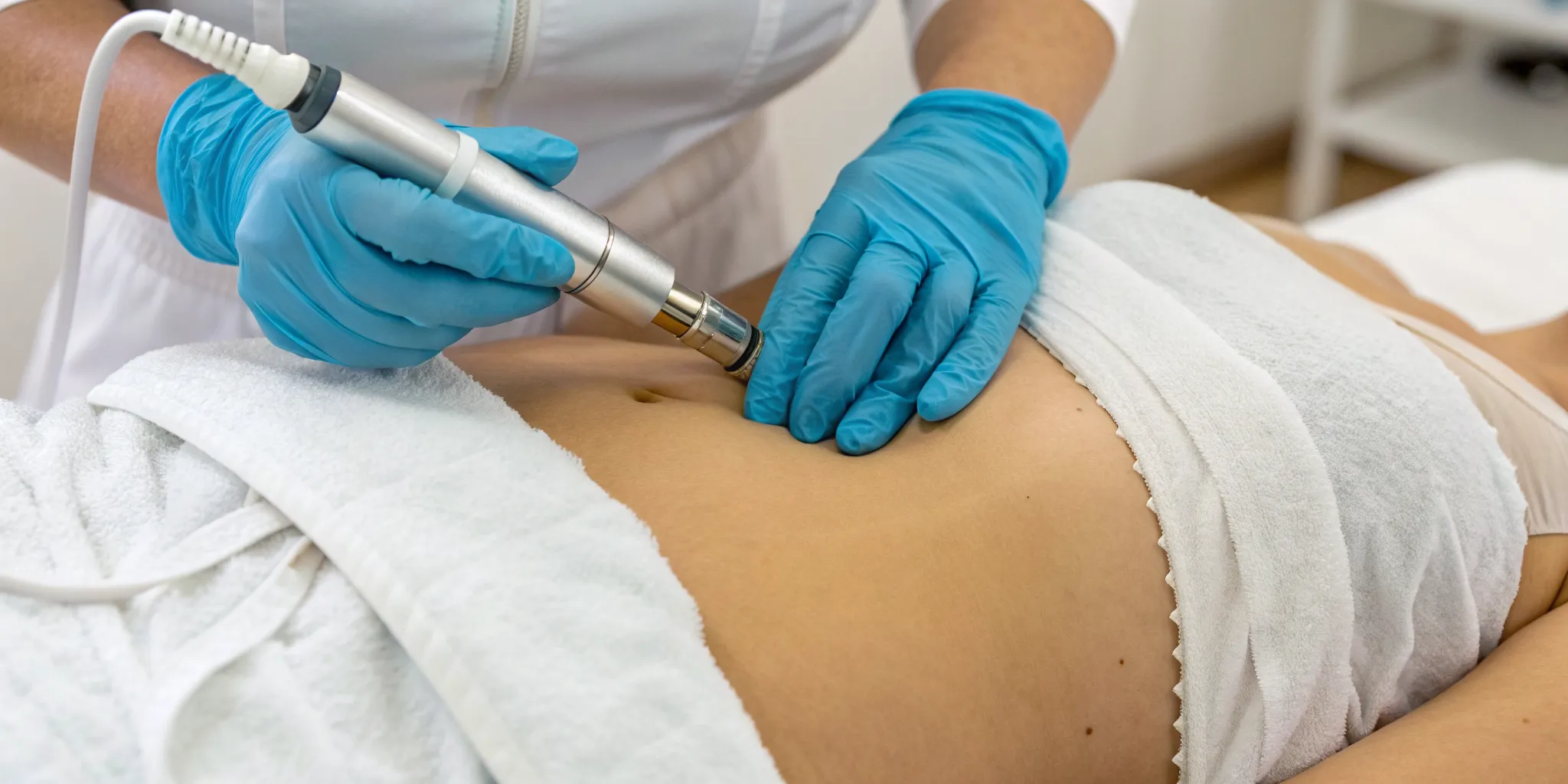
Often called collagen induction therapy, microneedling is a highly effective treatment for indented acne scars. The procedure uses a specialized device with tiny, sterile needles to create controlled micro-injuries in the skin. This process triggers the body’s natural healing response, which includes a surge in collagen and elastin production. As your skin repairs itself, the new collagen helps to fill in the depressions left by old acne, resulting in a smoother and more even skin texture. It’s particularly effective for treating widespread rolling or boxcar scars and can be customized for different skin types.
Chemical Peels
A chemical peel involves applying a specialized solution to the skin, which causes the outer layer to exfoliate and eventually peel off. Once the old layer is gone, the regenerated skin underneath is typically smoother and less irregular. Peels come in different strengths—light, medium, and deep—and a skin care professional will help determine the right concentration for your scar type and skin sensitivity. While lighter peels are great for addressing discoloration, medium to deep peels are more effective for treating shallow atrophic scars by encouraging new, healthy skin cell growth and collagen production.
Dermabrasion and Microdermabrasion
Think of these treatments as a form of powerful mechanical exfoliation for your skin. Dermabrasion is a more intensive procedure where a specialist uses a high-speed rotating tool to essentially “sand” down the outer layers of skin, leveling the surface and improving the appearance of scars. Because it’s more aggressive, it requires some recovery time. Microdermabrasion is a much gentler version that uses tiny crystals or a diamond-tipped wand to lightly exfoliate the skin’s surface. It’s best for very superficial scars and requires minimal to no downtime, making it a popular choice for those seeking a quick refresh.
Surgery
There are some surgical options for acne scarring. There are surgeries for both raised acne scars and depressed acne scars. For depressed acne scars dermatologists can cut into the skin and raise the skin. This can eliminate smaller scars and make more serious scars less noticeable. As for raised scarring dermatologists can cut away at the scarring. This can also reduce noticeability for more serious scarring and eliminate smaller scars.
Subcision
For certain types of indented scars, a dermatologist might recommend a procedure called subcision. Think of it like this: tough, fibrous bands under your skin are pulling the scar down, creating that pit or depression. During subcision, a special needle is inserted beneath the skin’s surface to carefully break up these bands. According to the Mayo Clinic, releasing these bands allows the skin to rise, making the scar much less noticeable. This simple release can make a significant difference in the texture and overall appearance of the scar, helping to create a smoother surface without extensive downtime.
Punch Techniques
When dealing with very deep, defined scars like ice pick or boxcar scars, dermatologists have a couple of other tricks up their sleeves called punch techniques. One method is punch excision, where a tiny, circular tool is used to cut out the individual scar. The small opening is then closed with a stitch, replacing the indented scar with a much smaller, flatter line that fades over time. Another option is punch grafting. With this technique, the scar is removed in the same way, but instead of stitching the wound, it’s filled with a tiny plug of healthy skin, usually taken from a discreet spot like behind your ear. This essentially replaces the scarred tissue with new, smooth skin.
Dermal Fillers
Dermal fillers can be used to improve depressed acne scars. By injecting them into the skin they can help make these kinds of scars less noticeable. The most popular of these scars are Juvederm, Radiesse, and Restylane. They are made with hyaluronic acid, which naturally occurs in the skin. The major downside to this kind of treatment is that it is temporary, and you need to have the injections redone every six to twelve months depending on the kind of filler used.
Botox Injections
You might think of Botox as just a wrinkle-smoother, but it has some clever uses for certain types of acne scars, too. For scars that cause the skin to pucker or look tense, a small amount of Botox can be a game-changer. According to the Mayo Clinic, injecting it into the skin around a scar can relax the skin, which helps soften the scar’s appearance and makes the whole area look smoother. It’s a great option for addressing the dynamic tension that can make a scar more noticeable. Here at LightRx, we find that Botox can be an effective part of a comprehensive scar treatment plan, but keep in mind that the results are temporary, so you’ll need to schedule repeat treatments to maintain the effect.
Fat Transfer
For deeper, indented scars that create significant volume loss, a procedure called fat transfer can be an excellent solution. This treatment, also known as autologous fat transfer, uses your body’s own fat to fill in the depressions. A medical professional will carefully take a small amount of fat from another area, like your abdomen or thighs, and inject it directly into the sunken scars. As noted by Stanford Medicine, this process helps raise sunken scars, creating a more even and uniform skin surface. Because it uses your own tissue, it’s a natural way to restore volume and can provide long-lasting improvement for some of the most challenging types of acne scars.
Skin rejuvenation treatment at LightRx
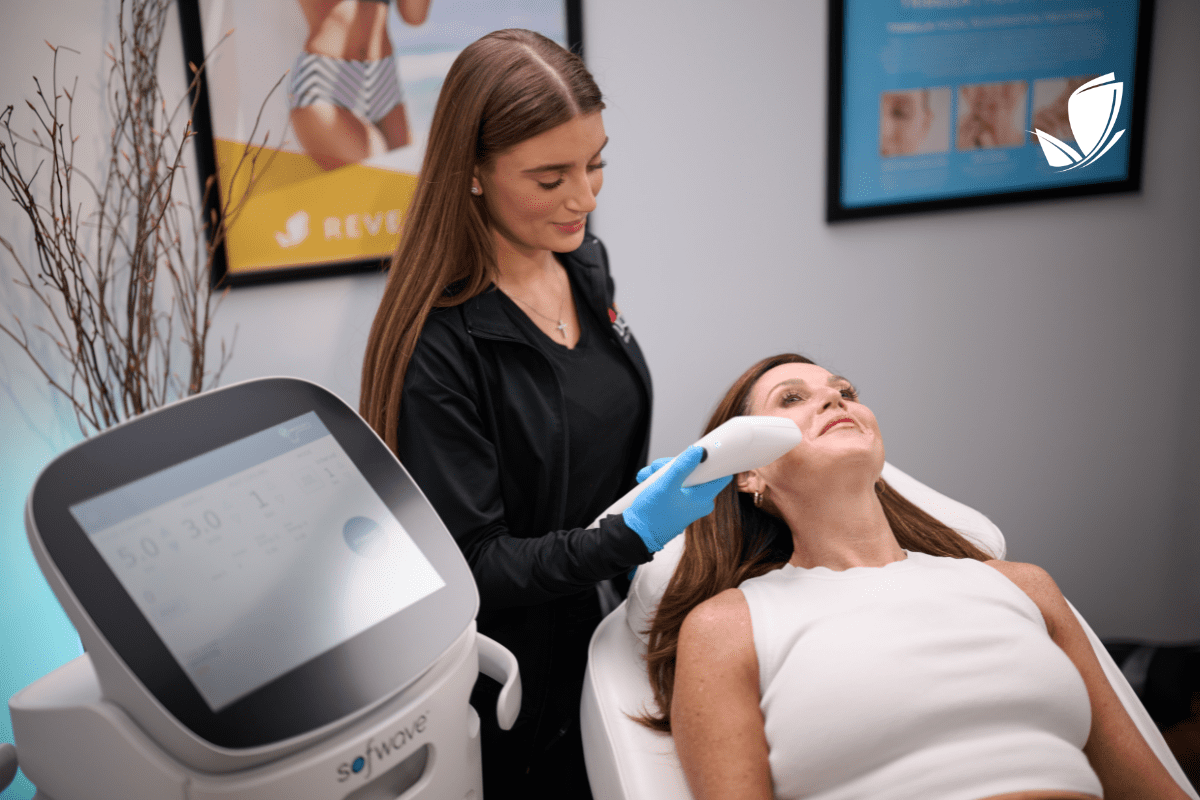
FDA-cleared, clinically proven Venus Viva™ works to improve the overall texture of your skin by restructuring texture through the creation of new collagen fibers. Collagen is the skin fiber responsible for tightening and structuring the skin. They are also responsible for making scar tissue. What often happens is they are overactive when creating scar tissue and as a result you get the permanent scarring. What the Venus Viva™ does is it breaks down the old collagen in the scar tissue and encourages new collagen to be made. This new collagen will work to make the scarring less noticeable. Skin resurfacing is safe for men and women and terrific for treating acne scars. Venus Viva™ combines NanoFractional™ Radio Frequency (RF) and Pulsed Electro Magnetic Fields with SmartScan™ technology to safely deliver reparative heat to deeper layers of the skin without causing harm to any of the surrounding tissue. The RF tightens existing collagen fibers in the dermis while stimulating collagen production cells (fibroblast) to make new collagen for the skin. This process activates the body’s ability to naturally rebuild and regenerate collagen (Collagen Remodeling). As a result, scars are smoothed out, while discoloration is corrected, and skin tone and texture evened out. The best thing about this treatment is that it is noninvasive, meaning that unlike surgery, there is no need for downtime and much less of a risk of serious side effects. If you are interested in learning more about our treatments and want to know more, call us at 877-721-4547 or schedule a free consultation at your local LightRx. These consultations take as little as 30 minutes and are private one on one consultations with the clinic director.
Cryosurgery
For certain types of raised scars, like hypertrophic or keloid scars, cryosurgery can be an effective option. This technique involves carefully applying liquid nitrogen to freeze the scar tissue. The extreme cold essentially causes the targeted tissue to die off and eventually fall away from the skin. As the area heals, the goal is for the scar to become significantly flatter and less noticeable. Think of it as a highly controlled way to remove the excess tissue that makes up a raised scar. This method is quite specific and is typically reserved for these particular scar types, which are more common on the body than the face.
Expert Advice and Important Considerations
Deciding on a professional treatment for acne scars is a significant step, and it’s smart to be well-informed before you begin. Beyond knowing the different types of procedures available, there are a few key considerations that will set you up for the best possible results. From timing your treatment correctly to understanding the recovery process, thinking through these factors will help you create a realistic and effective plan. Taking the time to prepare will make your entire experience smoother and more successful.
Treat Active Acne First
Before you can effectively address the scars, you need to manage the source. One of the most important rules in scar treatment is to get any active acne under control first. It can be tempting to jump straight into fixing the scars, but starting a treatment plan while you’re still experiencing breakouts can be counterproductive. According to the American Academy of Dermatology, new blemishes can unfortunately lead to new scars, undoing the progress you’ve made. By focusing on a clear-skin strategy first, you create a stable foundation, ensuring that the investment you make in scar removal will have lasting results.
The Importance of a Professional Consultation
You wouldn’t start a major project without a blueprint, and the same goes for treating your skin. A professional consultation is your essential first step. This is your dedicated time to sit down with an expert who can properly assess your unique skin and scar types. It’s the perfect opportunity to discuss your aesthetic goals, your budget, and how much downtime you can realistically handle. At LightRx, we offer a free personal consultation to create a treatment plan tailored specifically to you, ensuring the approach aligns perfectly with your needs and lifestyle. This personalized guidance is key to choosing the most effective path forward.
Combination Therapy Often Yields the Best Results
It’s very common for people to have several different types of acne scars—maybe a few rolling scars on the cheeks and an ice pick scar on the temple. Because of this, a single treatment method often isn’t enough to address everything effectively. Experts frequently recommend a combination of therapies to achieve the best outcome. For instance, a plan might involve a procedure like subcision to lift a deeply indented scar, followed by a series of skin rejuvenation treatments to improve the overall texture and tone. This multi-faceted approach allows a technician to use the right “tool” for each specific concern, leading to more comprehensive and satisfying results.
Understanding Risks and Recovery Time
Professional treatments are powerful, and it’s important to have a clear picture of what to expect during and after your sessions. Many procedures, especially those involving lasers or deep exfoliation, require some downtime. Recovery can range from a few hours of redness to several days of healing, depending on the intensity of the treatment. It’s also crucial to discuss potential risks with your provider. As the Mayo Clinic notes, some treatments carry a higher risk of discoloration for darker skin tones. A qualified professional will walk you through all of this information upfront so you can make a confident and informed decision.
Frequently Asked Questions
Is the dark spot left by a pimple a permanent scar? Not usually. Those lingering red or brown marks are typically post-inflammatory hyperpigmentation (PIH), which is a discoloration issue, not a textural one. True scars involve a change in the skin’s texture, creating either a pit or a raised area. While PIH can be stubborn, it often fades over time, and professional skin rejuvenation treatments can speed up that process significantly.
Can my acne scars be completely erased? While the goal is to make scars as unnoticeable as possible, it’s more realistic to think of treatment as a way to dramatically improve their appearance rather than erase them entirely. Professional procedures work to rebuild collagen and smooth the skin’s surface, which can make scars blend seamlessly with the surrounding skin. The result is a much smoother, more even complexion that you can feel confident in.
With so many options, how do I know which professional treatment is right for me? There is no single “best” treatment because every person’s skin and scarring are unique. The ideal approach for shallow rolling scars is very different from the one needed for deep ice pick scars. This is why a personal consultation with a skin care expert is so important. They can assess your specific scar types, consider your skin tone, and create a tailored plan that gives you the most effective results.
Why is it so important to get my active breakouts under control before treating scars? Think of it this way: you wouldn’t want to repair a wall while it’s still being damaged. Treating scars while you’re still getting new, inflammatory breakouts can be counterproductive, as new blemishes can lead to new scars. By clearing your active acne first, you create a stable canvas, ensuring the time and investment you put into scar treatments will have lasting, visible results.
What kind of downtime should I expect with professional scar treatments? Recovery time really depends on the intensity of the treatment you choose. A gentler procedure like microdermabrasion might leave you with a little redness for a few hours, while more intensive treatments like ablative laser resurfacing could require several days of healing. A qualified professional will walk you through the entire process, including what to expect for recovery, so you can plan accordingly and feel prepared.
Key Takeaways
- First, figure out what you’re dealing with: Knowing the difference between temporary discoloration (PIH) and true indented or raised scars is the essential first step. This understanding helps you select a treatment path that will actually be effective for your specific concerns.
- Align your treatment with your goals: Over-the-counter products with retinoids and acids are great for improving surface-level texture and tone. However, for deeper, indented scars, professional procedures like laser resurfacing or microneedling are necessary to remodel the skin and achieve a smoother appearance.
- Create a smart treatment strategy for the best results: Always get active acne under control before starting scar removal. A professional consultation is key to building a personalized plan, which often combines different therapies to address various scar types for more comprehensive improvement.